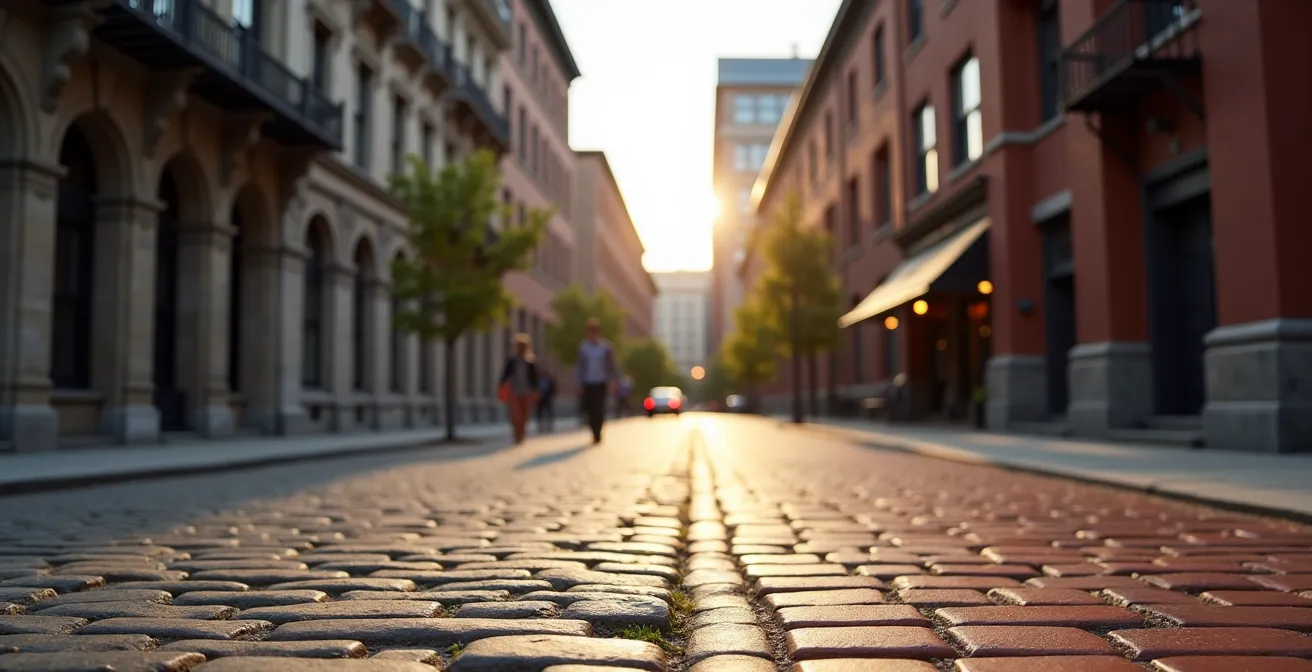
Choosing between Old Montreal and the Distillery District is about more than just architecture; it’s about matching a place to your personality.
- Old Montreal offers an immersive, European-style historical wander for those who love spontaneous discovery.
- The Distillery District provides a polished, post-industrial cultural experience, perfect for art and design lovers.
Recommendation: For spontaneous explorers who crave organic history, choose Montreal. For connoisseurs seeking a curated and contained cultural day, choose Toronto.
The clock is ticking on your city break, and a classic Canadian travel dilemma emerges: should you immerse yourself in the romantic, European-like labyrinth of Old Montreal or explore the polished, Victorian-industrial chic of Toronto’s Distillery District? For the time-crunched traveler, choosing where to invest those precious hours is a critical decision. The typical advice often boils down to a simple architectural comparison—French-inspired stone versus English red brick—and a generic reminder to wear comfortable shoes on the cobblestones. But this surface-level analysis misses the most important factor: the distinct personality of each district.
These historic quarters are not interchangeable museums. They are living urban spaces with unique rhythms, textures, and stories. What if the best choice isn’t about the buildings themselves, but about the *feeling* you get while walking their streets? This isn’t just a question of aesthetics, but of atmosphere. It’s the difference between a place that encourages you to get lost and one that guides you from one curated experience to the next. While our main focus is the classic Montreal-Toronto showdown, the principles of decoding a district’s ‘vibe’ apply to Canada’s other cherished urban heritage sites, from Vancouver’s Gastown to the Halifax waterfront.
This guide moves beyond the tourist brochures to dissect the character of these iconic Canadian spaces. We’ll explore the forces that shaped them, the practicalities of navigating their streets, and the optimal times to visit to capture their true essence. By understanding the personality of each quarter, you can confidently choose the one that doesn’t just fit your itinerary, but truly fits your vibe.
Summary: Decoding Canada’s Iconic Historic Quarters
- Why Did Toronto’s Distillery District Transform From Industrial Wasteland to Hub?
- How to Navigate Cobblestone Streets Without Ruining Your Shoes or Ankles?
- Daytime Architecture vs. Nightlife Atmosphere: When to Visit Old Quebec?
- Pickpocket Awareness: Is It a Real Risk in Vancouver’s Gastown?
- Avoiding the Crowd: Which Days Are Worst for Visiting Halifax’s Historic Properties?
- Why Does UNESCO Heritage Status Change Property Values in Old Districts?
- Why Does Richmond, BC Have the Best Asian Food Scene in North America?
- Why Toronto’s Skyline Changed Drastically in the Last 10 Years?
Why Did Toronto’s Distillery District Transform From Industrial Wasteland to Hub?
The Distillery District’s evolution from a derelict industrial site to a premier cultural destination is not an accident of history, but a masterclass in curated urban revitalization. Unlike many heritage projects that rely on public funds, its rebirth was driven by a distinct private-sector vision. When Cityscape Holdings purchased the site in 2001, they didn’t just aim to preserve buildings; they aimed to craft an entire experience. This foundational difference is the key to understanding its unique “vibe” compared to the more organically evolved Old Montreal.
Case Study: The Privately-Funded Model of the Distillery District
Research on the district’s redevelopment highlights its nature as an “upscale leisure destination” shaped by private investment without public subsidies. This model allowed developers to impose a cohesive vision, transforming it into a pedestrian-only village dedicated to arts, culture, and commerce. While this process represents the commodification of a post-industrial landscape, the developers made a conscious choice to avoid typical chain restaurants, instead fostering a mix of local artisanal producers, independent boutiques, and serious theatre venues, creating a polished but authentic-feeling cultural bubble.
This deliberate curation means that every element, from the signage to the tenant mix, is designed to contribute to a specific, cohesive atmosphere. It’s a space of intentional discovery, where visitors are guided through a perfectly staged version of Victorian industrial heritage. This is not a critique but a definition of its character: it is less a ‘lived-in’ neighborhood and more a beautifully executed cultural theme park for adults, making it a predictable and highly satisfying destination for those seeking a concentrated dose of art, food, and design.
How to Navigate Cobblestone Streets Without Ruining Your Shoes or Ankles?
The romantic allure of cobblestone streets quickly fades with the first twisted ankle or ruined pair of heels. Both Old Montreal and Toronto’s Distillery District feature these historic surfaces, but their urban textures are fundamentally different, demanding a smart approach to footwear. Old Montreal’s streets are paved with true, uneven cobblestones, their centuries of wear creating a genuinely rustic and sometimes treacherous surface. The Distillery District, by contrast, features more uniform Victorian-era brick pavers, which are generally flatter and easier to walk on.
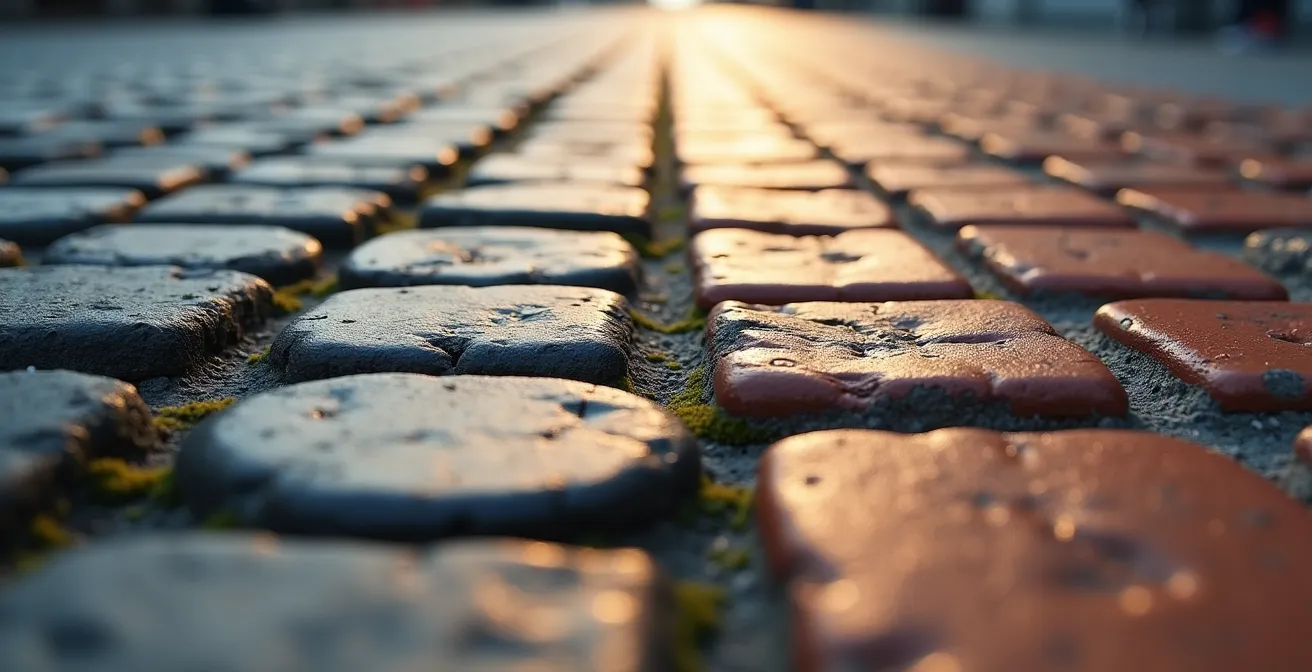
As the image above highlights, the tactile difference is significant. Navigating these surfaces comfortably is not just about choosing “comfy shoes”; it’s about a strategy that respects the historic terrain. The right footwear is your primary defense. Think thick, flexible rubber soles that can absorb the shock of uneven stones and provide a stable platform. Ankle support is not an overstatement, especially in Old Montreal where the gaps and angles between stones can be pronounced.
Beyond shoes, your gait matters. A hurried pace increases the risk of a misstep. Adopting a slower, more deliberate walk allows you to appreciate your surroundings while keeping an eye on the path ahead, particularly when stones are wet and slick. For those with mobility concerns, both districts have made efforts to improve accessibility, but it requires planning.
Your Cobblestone Comfort Checklist
- Footwear First: Select shoes with thick rubber soles and adequate ankle support to handle uneven surfaces.
- Pace Yourself: Walk at a slower, more mindful pace, paying close attention to your footing, especially on wet or icy cobblestones.
- Walk the Edge: Utilize the smoother edges of walkways, where stones are often more level and worn down by time.
- Winter-Proof Your Walk: In winter, opt for boots with deep, aggressive treads to ensure a secure grip on potentially icy stones.
- Accessibility Check: Before you go, identify designated smooth pathways and ramps available in both districts to plan an accessible route.
Daytime Architecture vs. Nightlife Atmosphere: When to Visit Old Quebec?
While often grouped with Old Montreal for its Francophone heritage, Old Quebec offers its own distinct rhythm, heavily influenced by seasons and time of day. Choosing when to visit is crucial to unlocking the experience you seek, whether it’s quiet architectural admiration or immersion in a festive, bustling atmosphere. The district’s character shifts dramatically with the sun’s position and the annual calendar of events, making timing a strategic decision.
During the day, especially on a quiet weekday morning, the focus is squarely on the architecture and history. The light reveals the intricate details of the centuries-old stone buildings, and the thinner crowds allow for unobstructed views and photography. This is the ideal time for guided walking tours or for simply wandering the ramparts to soak in the UNESCO World Heritage site’s ambiance. In contrast, the evenings bring a different energy. As streetlights cast a golden glow, the district transforms into a hub of dining and social activity. The focus shifts from stone facades to the lively interiors of restaurants and bars, creating a romantic and social vibe.
The season you visit in is perhaps the biggest factor. Summer brings long daylight hours and major events like the Festival d’été de Québec, resulting in a vibrant but extremely crowded experience. Winter, though cold and dark, offers the magical atmosphere of the Carnaval de Québec and the “blue hour” light that makes the snow-covered streets feel like a fairytale.
The following guide breaks down the seasonal experience to help you align your visit with your travel style.
| Season | Daylight Hours | Best Time | Key Events | Crowd Level |
|---|---|---|---|---|
| Summer | 5:30am-9:00pm | Golden hour (7-9pm) | Festival d’été de Québec | Very High |
| Winter | 7:30am-4:30pm | Blue hour (3-4pm) | Carnaval de Québec | High |
| Spring | 6:00am-7:30pm | Morning (9-11am) | Victoria Day weekend | Moderate |
| Fall | 6:30am-6:00pm | Afternoon (2-4pm) | Autumn foliage season | Moderate-High |
Pickpocket Awareness: Is It a Real Risk in Vancouver’s Gastown?
When visiting any popular, crowded urban area, a degree of situational awareness is always wise. However, the fear of pickpocketing in Canadian historic districts like Vancouver’s Gastown is often disproportionate to the actual risk. While Gastown has a complex social fabric, including a visible homeless population due to its proximity to the Downtown Eastside, it is not a hotbed of petty crime targeting tourists. The overall atmosphere, especially in the evening, is one of vibrant safety.
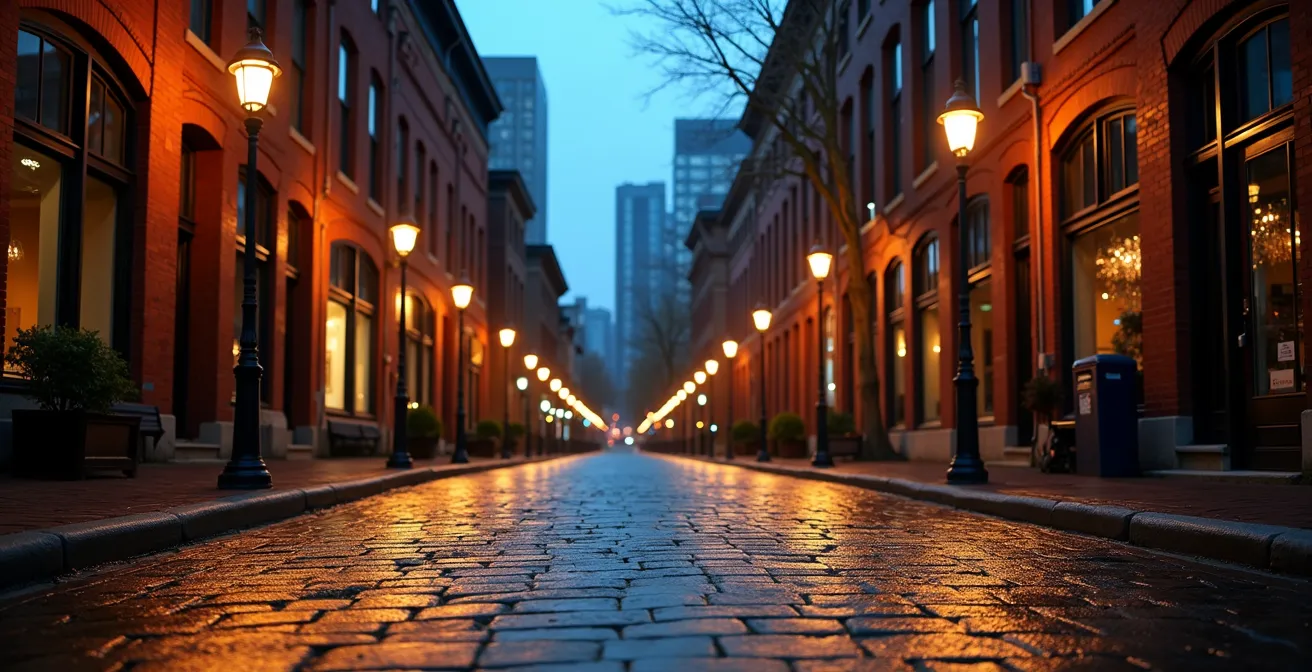
The perception of risk is often higher than the reality. Gastown’s streets are well-lit, with the warm glow from its famous steam clock and vintage-style lamps creating an inviting environment. The area is bustling with people patronizing its many acclaimed restaurants, unique boutiques, and cocktail bars. This constant, positive foot traffic acts as a natural deterrent to opportunistic crime. The biggest annoyance for a visitor is more likely to be an aggressive panhandler than a stealthy pickpocket.
Context is everything. Canada, as a whole, enjoys a reputation as a very safe country. While no city is entirely free of crime, incidents of pickpocketing are remarkably low compared to many European or American tourist hubs. In fact, a Destination Canada safety assessment confirms that tourist areas in the country rank among the safest globally with minimal such incidents. Standard precautions—like keeping your wallet in a front pocket and not leaving your bag unattended—are sufficient. There is no need for the heightened, defensive posture one might adopt in other world cities. This sense of security is a key part of the relaxed “vibe” that makes exploring Gastown so enjoyable.
Avoiding the Crowd: Which Days Are Worst for Visiting Halifax’s Historic Properties?
Halifax’s waterfront, home to its Historic Properties, offers a charming maritime atmosphere, but the experience can be dramatically altered by one single factor: cruise ships. The single worst time to visit is on a day when multiple large ships are docked in port. The sudden influx of thousands of passengers can overwhelm the relatively compact area, transforming a leisurely stroll into a crowded shuffle. For travelers seeking a more authentic, local “vibe,” strategic timing is everything.
On a peak cruise day, the waterfront between 10 AM and 4 PM becomes the epicenter of tourist activity. Queues for food stalls lengthen, shops become congested, and the open spaces fill up, making it difficult to appreciate the historic architecture and harbour views. The key to a better experience is to plan around the cruise schedule, which is readily available online from the Port of Halifax. A day with no ships, or only one small ship, will offer a completely different, more relaxed atmosphere. If your visit must coincide with a major cruise day, you can still outsmart the crowds.
The hours before 10 AM and after 5 PM are your golden windows. Early mornings on the waterfront are peaceful, shared mostly with locals out for a jog or coffee. In the late afternoon, as passengers return to their ships, the area regains its calmer pace, perfect for enjoying a seaside dinner. On the busiest days, consider exploring an alternative historic area like the Hydrostone Market, a charming North End district rebuilt after the Halifax Explosion, which is largely off the main cruise tourist trail.
Halifax Waterfront Crowd-Dodging Plan
- Check the Schedule: Before you go, consult the Port of Halifax cruise schedule online. Avoid days with two or more large ships in port.
- Time Your Visit: On cruise days, visit the waterfront before 10 AM or after 5 PM to experience a more local, less crowded atmosphere.
- Target Weekdays: For the quietest experience at museums and historic properties, plan your visit for a weekday morning.
- Find an Alternative: If the waterfront is packed, explore the Hydrostone Market in the North End for a different, but equally compelling, historic Halifax experience.
- Go Indoors During Peak Hours: Use the peak outdoor crowd time (10 AM – 4 PM) to visit indoor attractions like the Maritime Museum of the Atlantic.
Why Does UNESCO Heritage Status Change Property Values in Old Districts?
Receiving a designation like a National Historic Site or a UNESCO World Heritage listing is more than just an honorary plaque; it’s a powerful economic driver that fundamentally alters the character and value of a district. This status acts as a double-edged sword: it preserves architectural integrity while simultaneously sparking intense commercial interest, leading to a significant increase in property values. The Distillery District, designated a National Historic Site of Canada in 1988, is a prime example of this dynamic.
The designation itself is a global seal of approval. It elevates a district’s profile, attracting a higher volume of tourists and, consequently, businesses eager to cater to them. This increased demand for retail and commercial space naturally drives up rental rates and property values. As a recent retail industry analysis reveals, the Distillery District’s 400,000 square feet of heritage space with its 88 tenants now generate premium rents, a direct result of its protected status and cultural cachet.
However, the status also imposes strict preservation guidelines. In the case of the Distillery District, Parks Canada oversees these rules, which dictate what can and cannot be done during renovations. This protects the site’s Victorian-era industrial architecture—the largest such collection in North America—from inappropriate development. While these restrictions can increase renovation costs, they guarantee the very authenticity that makes the property so valuable in the first place. The international recognition for these efforts often follows, as the History of Toronto Archives note in the Toronto Historical Development Report:
The UNESCO Prix Versailles for architectural achievements in urban revitalization was awarded to the distillery district in 2003
– History of Toronto Archives, Toronto Historical Development Report
This award-winning combination of preservation and revitalization creates a feedback loop: authenticity drives tourism, tourism drives commercial value, and the value justifies the high cost of preservation.
Why Does Richmond, BC Have the Best Asian Food Scene in North America?
While not a “historic district” in the cobblestone-and-brick sense, Richmond, British Columbia, represents a different kind of Canadian heritage: a living, breathing nexus of Asian culinary traditions. Its claim to having the best Asian food scene in North America isn’t just local pride; it’s a verifiable reality rooted in demographics, density, and an unwavering commitment to authenticity. For any traveler who defines a “vibe” by its flavours, Richmond is a non-negotiable pilgrimage.
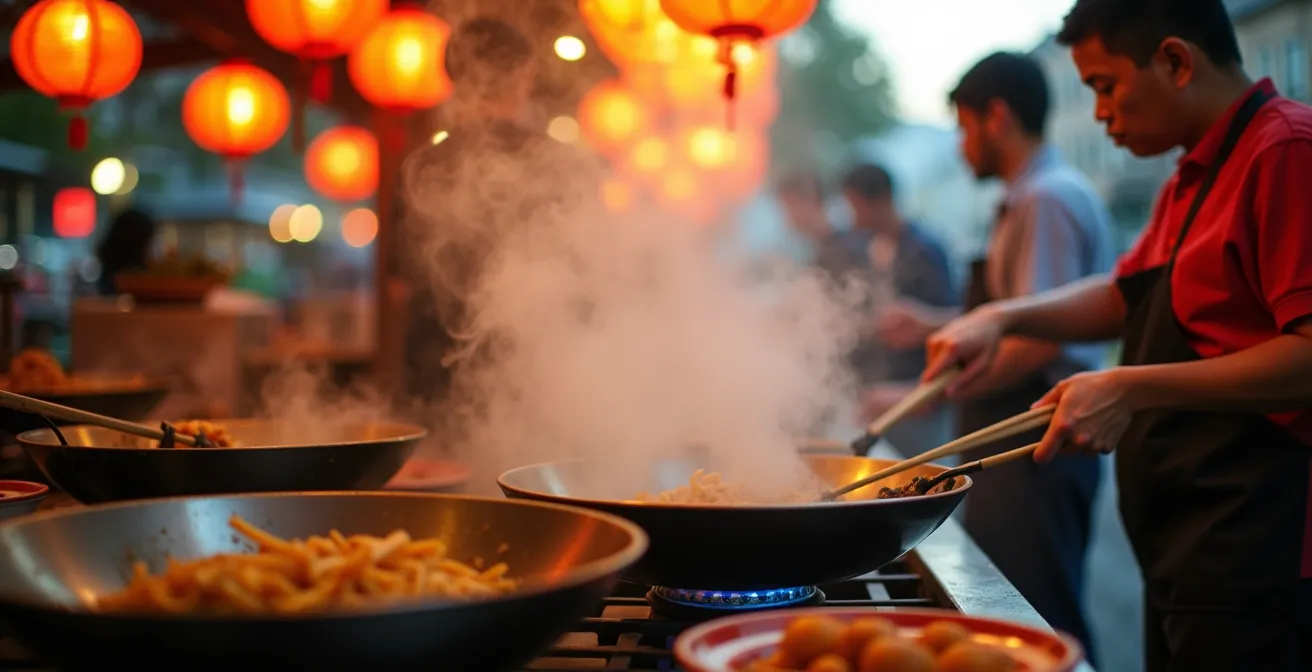
The secret to Richmond’s culinary dominance is simple: demographic density. With over half of its population being of Chinese descent and a significant number of residents from other parts of Asia, there is a built-in, discerning clientele that demands authentic, high-quality food. This is not fusion cuisine for a Western palate; this is the real deal, from fiery Sichuan hot pots to delicate Cantonese dim sum and rich Taiwanese beef noodle soup. This deep community connection ensures that culinary standards remain exceptionally high.
This demand is met with an astonishing supply. As culinary density statistics demonstrate, Richmond has over 800 Asian restaurants serving 230,000 residents, creating a hyper-competitive market where only the best survive. This fierce competition benefits the diner, leading to constant innovation, exceptional quality, and reasonable prices. Whether it’s a hole-in-the-wall dumpling shop in a strip mall or a grand banquet hall, the underlying principle is a dedication to tradition and flavour. This concentration makes it possible to take a culinary tour of an entire continent within just a few square kilometers, an experience unmatched anywhere else on the continent.
Key Takeaways
- Historic districts have distinct personalities: Old Montreal is for wanderers who love organic history, while Toronto’s Distillery District is for connoisseurs seeking a curated cultural experience.
- Practical preparations are key: The right footwear for varied “urban textures” and strategic timing to avoid cruise-ship crowds can make or break your visit.
- Authenticity is a managed asset: Designations like UNESCO status protect a district’s character but also intensify commercialization, shaping both property values and the visitor experience.
Why Toronto’s Skyline Changed Drastically in the Last 10 Years?
The dramatic verticalization of Toronto’s skyline, especially in the areas surrounding the Distillery District, is a story of strategic urban planning meeting a global city’s growth pressures. While the low-rise Victorian heritage of the district itself is fiercely protected, the land around it has been designated for high-density development. This juxtaposition of old and new is a defining feature of Toronto’s modern identity, and a major catalyst for this change was the 2015 Pan American Games.
The construction of the Athletes’ Village for the games, located just northwest of the Distillery District in the West Don Lands, was a massive undertaking that kickstarted a wave of development in the city’s east end. This wasn’t just temporary housing; it was designed from the outset for post-games conversion. The area, now known as the Canary District, transformed vacant industrial lands into a vibrant mixed-use community with townhouses, condominiums, and affordable housing units. As the City of Toronto Planning Department’s official plan states:
Toronto’s Official Plan designates the Distillery District as a mixed-use land parcel, emphasizing enhancing the existing historical buildings while the city verticalizes around it
– City of Toronto Planning Department, Toronto Official Plan – King-Parliament Secondary Plan
This event accelerated a pre-existing trend. Toronto is one of North America’s fastest-growing cities, and accommodating this growth means building up. The stark visual contrast between the protected, two-story brick buildings of the Distillery and the gleaming, 35-storey condo towers that now border it is the physical manifestation of Toronto’s core planning philosophy: preserve the past in pockets while aggressively building the future around it. This creates a unique urban experience where you can step from a meticulously preserved 19th-century streetscape into a hyper-modern downtown core in a matter of minutes.
Now that you have the framework to decode the personality of any historic district, it’s time to plan your next urban adventure with confidence. By looking beyond the architecture and tuning into the unique rhythm of a place, you can ensure your choice aligns perfectly with your own travel vibe.