In summary:
- Treat the festival not as a venue, but as a complex urban ecosystem you can learn to master.
- Strategic navigation of crowds and transit is more important than arriving hours early.
- Choose your listening spot based on “acoustic arbitrage”—trading crowd density for sound quality.
- Curate your own high-calibre festival lineup from the free outdoor stages by understanding the festival’s rhythm.
Every July, a palpable energy overtakes downtown Montreal. The air thrums with bass lines, saxophone solos drift from packed city squares, and the Quartier des Spectacles transforms into the world’s largest jazz club. For a visiting music lover, the Montreal International Jazz Festival is a pilgrimage. The immediate advice you’ll hear is simple: just show up for the free outdoor shows. While true, this advice barely scratches the surface and often leads to an overwhelming experience of battling crowds for a spot with terrible sound.
Most guides will tell you to check the schedule and get there early. But what if the real secret wasn’t just being present, but being strategic? What if you could navigate the festival’s sprawling grounds not as a tourist, but as a seasoned insider? The key to unlocking a world-class festival experience for free isn’t about luck; it’s about understanding the festival’s unique urban ecosystem. It’s a craft that involves mastering the crowd’s pulse, practicing acoustic arbitrage, and curating your own lineup with intention.
This guide moves beyond the obvious. We’ll explore why these spectacular free shows exist in the first place, how to move through the masses with ease, and how to make informed choices that elevate your free experience from simply “attending” to truly “experiencing.” Forget just showing up; it’s time to learn the art of the free show.
To help you master this urban musical landscape, we have structured this guide to give you a true insider’s perspective on every aspect of the free festival experience. Discover the strategies that turn a casual visit into an unforgettable musical journey.
Summary: Your Strategic Guide to the Montreal Jazz Fest
- Why Do Cities Subsidize Free Concerts During Tourist Season?
- How to Navigate the Place des Festivals Crowds Without Getting Crushed?
- Outdoor Stages vs. Indoor Clubs: Which Offers a Better Acoustic Experience?
- The Decibel Danger: Do You Really Need Earplugs for Outdoor Jazz?
- The Grand Finale: Why Is the Last Sunday Night Often the Best Show?
- Pickpocket Awareness: Is It a Real Risk in Vancouver’s Gastown?
- Visiting During Caribana: How to Plan Around Road Closures?
- Old Montreal vs. Distillery District: Which Historic Quarter Fits Your Vibe?
Why Do Cities Subsidize Free Concerts During Tourist Season?
The massive free shows at the heart of the Jazz Fest aren’t just an act of civic generosity; they are a calculated and highly effective economic strategy. For a city like Montreal, a world-class festival is a powerful engine for tourism and global branding. By offering high-calibre concerts without a ticket price, the city creates an irresistible draw, turning the entire downtown core into an accessible, vibrant destination. This strategy pays enormous dividends, transforming cultural capital into tangible economic benefits.
The numbers speak for themselves. During the festival, Montreal sees a massive influx of visitors, with tourism forecasts for the 2024 summer season showing an expected 84% hotel occupancy rate during peak festival periods. This influx translates directly into revenue for hotels, restaurants, and local businesses. The Government of Canada actively invests in this success. According to Soraya Martinez Ferrada, Minister of Tourism, public support for the festival is a strategic investment because it “not only allows the city to shine internationally, but also stimulates economic growth in Quebec and helps our businesses.”
This “ROI of Joy” is a symbiotic relationship. The city and government provide the stage and the funding, creating a platform for both established legends and emerging artists. In return, hundreds of thousands of attendees inject money into the local economy. For the budget-conscious traveler, understanding this dynamic is key: you are not just a spectator; you are a welcome participant in a grand economic and cultural exchange. The free show is the city’s investment in an unforgettable experience that it hopes will have you returning for years to come.
How to Navigate the Place des Festivals Crowds Without Getting Crushed?
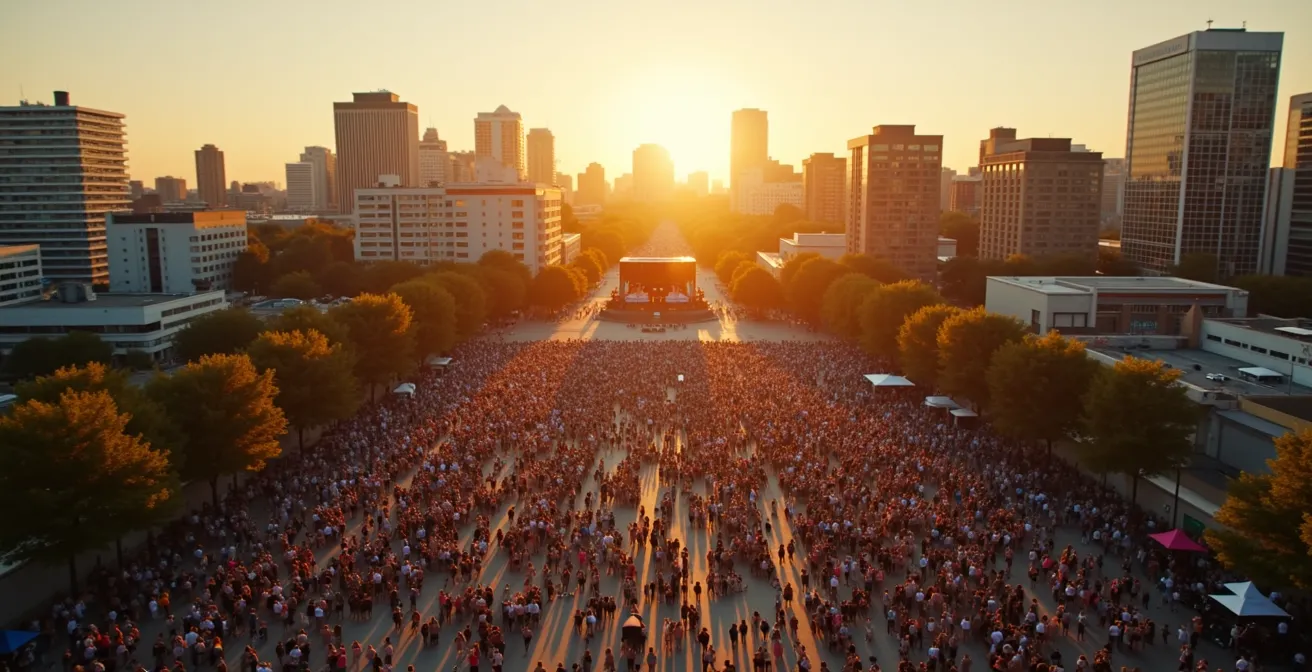
The main stage at Place des Festivals can feel like a roiling sea of people, especially for a headliner. The rookie mistake is to dive straight into the centre, only to find yourself pinned with no easy escape. The veteran move is to treat the crowd not as a wall, but as a living organism with a predictable pulse and flow. Understanding this tidal flow of people is the first step to comfortable navigation. The densest area is always directly in front of the stage, but the best experiences are often found elsewhere.
Instead of aiming for the epicentre, think strategically about your position. The peripheries of the square offer more space, easier access to food vendors and washrooms, and crucially, quick exit routes. For a more tactical approach, use Montreal’s urban geography to your advantage. Accessing the site from the Saint-Laurent metro station instead of the overwhelmed Place-des-Arts station can save you from the worst of the underground crush. Once on site, use the multiple outdoor stage areas to your advantage; moving between the smaller stages can be a great way to avoid the main stage bottleneck while discovering new music.
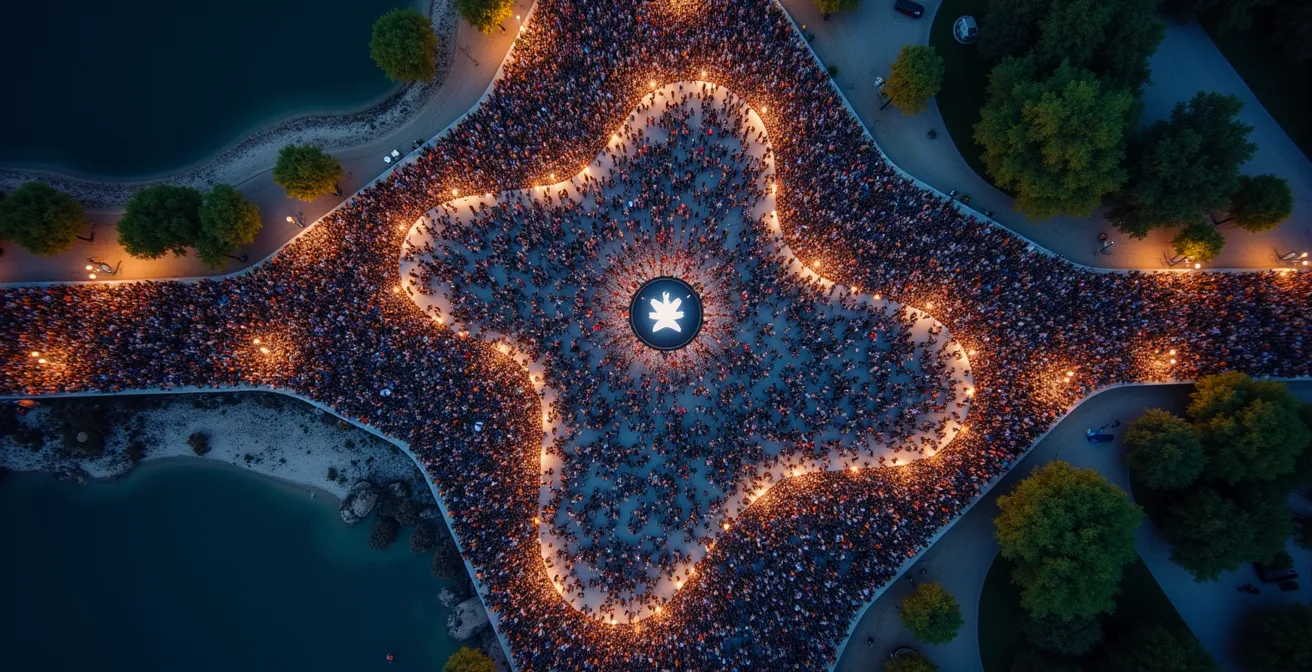
As this overhead view illustrates, the crowd naturally forms channels and pockets. The key is to identify and use these pathways along the edges and near sound towers. Many seasoned festival-goers position themselves near the perimeter and begin to move out during the second-to-last song of a set, beating the mass exodus that occurs the moment the music stops. By thinking like a strategist, you can enjoy the energy of the crowd without ever feeling trapped by it.
Outdoor Stages vs. Indoor Clubs: Which Offers a Better Acoustic Experience?
For the music lover, the festival presents a fundamental choice in sonic experience: the raw, communal energy of the massive outdoor stages versus the curated acoustics of an intimate indoor club. This is the core of “acoustic arbitrage”—the strategic trade-off between atmosphere and audio fidelity. Neither is inherently better, but they serve entirely different purposes, and understanding this difference is crucial for curating your perfect festival night.
The free outdoor stages, like the main TD Stage, are built for spectacle. The sound systems are powerful enough to reach tens of thousands of people, creating a shared, electrifying experience. However, the urban canyon of downtown Montreal means sound can be unpredictable. It bounces off skyscrapers, gets absorbed by the massive crowd, and competes with city noise. These venues are perfect for high-energy genres like funk, afrobeat, and rock-infused jazz, where the feeling of the beat and the collective energy matter more than catching every subtle nuance.
In contrast, Montreal’s legendary indoor clubs like Upstairs Jazz Bar & Grill offer a controlled environment. These spaces are purpose-built for music, with acoustics designed to capture the delicate interplay of a traditional jazz trio or the subtle textures of an acoustic set. Here, the experience is about intimacy and sonic purity. As a recent comparative analysis from Nextbop highlights, the choice depends entirely on your goal for the evening.
| Venue Type | Capacity | Acoustic Quality | Best For | Cost |
|---|---|---|---|---|
| Outdoor Stages (TD Stage) | 100,000+ | Variable (urban canyon effect) | High-energy funk, afrobeat, rock | Free |
| Indoor Clubs (Upstairs Jazz) | 100-500 | Purpose-built acoustics | Traditional jazz, acoustic sets | $15-50 cover |
| Concert Halls (Place des Arts) | 1,000-3,000 | Professional sound systems | Headliner shows | $50-150 tickets |
Ultimately, the savvy festival-goer uses both. Enjoy the massive free spectacles for their unparalleled energy, but consider investing in one or two ticketed indoor shows for a dose of pure, unadulterated acoustic bliss. This balanced approach provides the most complete sonic portrait of the festival.
The Decibel Danger: Do You Really Need Earplugs for Outdoor Jazz?
It’s a question that might seem counterintuitive. Jazz is often associated with smoky, mellow clubs, not ear-splitting volume. However, an outdoor stage at the Montreal Jazz Festival is a different beast entirely. To project sound over a massive, sprawling crowd in an open urban environment, sound systems operate at significant volumes. So, the short answer is: yes, you should absolutely bring earplugs. Thinking about hearing protection is not about being overly cautious; it’s about long-term musical enjoyment.
While the open air helps disperse sound, levels near the stages or speaker towers can easily reach 90-100 decibels (dB), comparable to a rock concert. According to public health resources, sustained exposure to noise levels above 85 dB can lead to permanent hearing damage. As Quebec public health guidelines recommend, protecting your ears during prolonged exposure is a critical part of concert safety. The risk is not just about one loud show, but the cumulative effect of attending several concerts over the ten days of the festival.
This doesn’t mean you have to sacrifice sound quality. Ditch the cheap foam plugs from the pharmacy, which muffle sound and ruin the musical experience. Instead, invest in a pair of high-fidelity earplugs, often called “musician’s earplugs.” These are available at music stores for a modest price and are designed to reduce the overall volume by 15-20 dB without distorting the frequencies. You’ll still hear the music clearly—the crisp cymbals, the warm bass, the intricate solos—just at a safer level. This is especially vital for children, whose ears are more sensitive; child-sized protective earmuffs are a wise investment for any family attending the festival.
The Grand Finale: Why Is the Last Sunday Night Often the Best Show?
There’s a unique magic to the final night of the Jazz Festival. After ten days of music, the city seems to exhale in one last, massive celebration. While every night offers something special, the grand finale event often transcends a typical concert to become a truly legendary Montreal moment. This isn’t just a feeling; it’s by design. The festival organizers traditionally save a spectacular, high-energy, and often cross-genre act for the closing show, designed to be a massive, unifying event.
This final show is the festival’s exclamation point. It’s a thank you to the city and its visitors, and the scale is staggering. While a typical big event draws large crowds, festival records indicate that closing concerts can draw between 150,000 and 200,000 people, packing the Place des Festivals from end to end. It’s less a concert and more a city-wide block party, where the shared energy of the massive crowd becomes as much a part of the performance as the music itself.
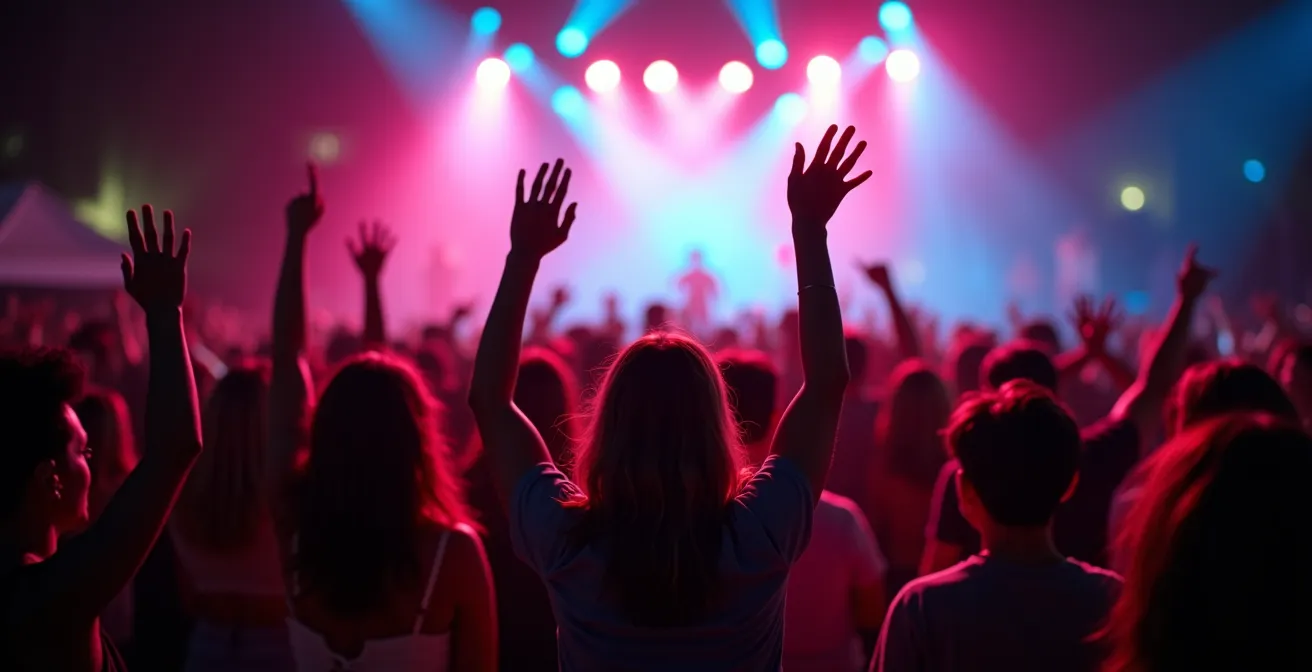
The atmosphere on this final night is one of pure, unadulterated joy and catharsis. There’s a sense of shared experience among the thousands who have spent the past week and a half soaking in music. The artists on stage often tap into this unique energy, delivering performances that are remembered for years. If your visit coincides with the festival’s closing weekend, prioritizing the grand finale is a must. It’s the ultimate expression of the festival’s spirit and the perfect, high-note ending to a musical journey.
Pickpocket Awareness: Is It a Real Risk in Vancouver’s Gastown?
While this question points to Vancouver’s Gastown, the issue of petty theft is a universal concern for any large urban gathering, and Montreal’s Quartier des Spectacles during the Jazz Fest is no exception. With hundreds of thousands of people packed into a few city blocks, distracted by world-class music, the environment is unfortunately ideal for pickpockets. While Montreal is a very safe city overall, staying vigilant is simply smart travel. The risk isn’t high enough to cause anxiety, but it is real enough to warrant a few simple precautions.
The key is to make yourself a less appealing target. Pickpockets thrive on anonymity and distraction. They are most active during crowd surges, such as the applause between songs or the mass movement of people after a show ends. The most vulnerable spots are crowded metro cars post-show, particularly at the Place-des-Arts station, and the dense throngs of people near the main stages. Your back pocket is the least secure place for a phone or wallet.
Adopting a few defensive habits can virtually eliminate the risk. Instead of carrying a backpack, which is out of your line of sight, opt for a cross-body bag worn on your front. Keep valuables in your front pockets. Better yet, minimize what you carry. Use tap-to-pay on your phone or a single card instead of bringing a wallet full of cash and cards. Being aware of your surroundings, especially during moments of crowd compression, is your best defence.
Your Action Plan for Crowd Safety
- Inventory Your Pockets: Before leaving for the festival, carry only one payment card and minimal cash. Leave other valuables in your hotel safe.
- Choose Your Bag: Opt for a cross-body bag worn on your front or a money belt. Avoid backpacks or purses that hang behind you.
- Secure Your Phone: Keep your phone in a front pocket, never a back pocket. When taking photos, be mindful of people bumping into you.
- Practice Transit Vigilance: Be extra alert in the metro after a show. Stand away from the doors and keep a hand on your belongings as people board and exit.
- Anticipate Surges: During applause or when a set ends, the crowd moves. Use these moments to consciously check that your belongings are secure.
Visiting During Caribana: How to Plan Around Road Closures?
Just as visitors to Toronto’s Caribana must plan for massive road closures, navigating Montreal during the Jazz Festival requires its own specific mobility strategy. The city core transforms, and what is usually a simple walk or cab ride becomes a logistical puzzle. The entire Quartier des Spectacles, particularly the stretch of Sainte-Catherine Street between De Bleury and Saint-Urbain, becomes a pedestrian-only zone. Driving anywhere near the festival grounds is not just difficult; it’s practically impossible. Success lies in embracing Montreal’s public and alternative transit systems.
The STM metro system is your best friend. The Place-des-Arts station on the Green Line drops you right into the heart of the action. However, during peak times, this station can become dangerously congested. A savvy local trick is to use the adjacent Saint-Laurent station and walk one block west, or even get off at McGill and enjoy a short walk east. This allows you to avoid the worst of the human traffic jam.
For even more flexibility, think beyond the metro. Montreal’s BIXI bike-share system is an excellent way to cover the last kilometre. You can dock your bike at a less-crowded station on the perimeter of the festival zone and walk in. Another powerful but underutilized tool is the RESO, Montreal’s “underground city.” You can navigate vast sections of downtown through climate-controlled tunnels, entering the network from as far as Bonaventure or McGill and emerging right at Place des Arts, bypassing all street-level chaos. Planning your drop-off points and transit routes in advance is the difference between a frustrating journey and a seamless arrival.
Key takeaways
- The “free” festival is a strategic economic driver for Montreal, not just a gift.
- Mastering crowd navigation and using alternative transit are key skills for a stress-free experience.
- Choose your listening spot based on a trade-off: outdoor stages for energy, indoor clubs for acoustic purity.
Old Montreal vs. Distillery District: Which Historic Quarter Fits Your Vibe?
A common question for visitors to Canada’s great cities is where to set up a home base. While Toronto has its iconic Distillery District, Montreal offers its own distinct choices for a historic and atmospheric stay. For the Jazz Festival visitor, the essential decision often comes down to two neighbourhoods: the cobblestone charm of Old Montreal versus the bohemian, vibrant energy of The Plateau. Each offers a completely different festival “persona” and caters to a different vibe.
Old Montreal is the classic tourist choice for a reason. It’s stunningly beautiful, packed with high-end restaurants, chic rooftop bars, and historic sites like the Notre-Dame Basilica. It’s a 15-20 minute walk to the festival grounds, making it incredibly convenient. Staying here means your days can be filled with museum-hopping and your evenings with jazz, followed by a nightcap in a centuries-old pub. It’s the polished, romantic, and often more expensive option.
The Plateau Mont-Royal, on the other hand, offers a more “live like a local” experience. This neighbourhood is famous for its colourful houses with swirling iron staircases, independent boutiques, and a laid-back, creative atmosphere. It’s a short 10-15 minute metro ride from the festival, and its distance provides a welcome respite from the downtown crowds. The Plateau is home to some of the city’s best local cafes, microbreweries, and the legendary 24/7 poutine institution, La Banquise—the perfect post-concert meal. It’s the authentic, eclectic, and more budget-friendly choice.
| Aspect | Old Montreal | The Plateau |
|---|---|---|
| Accommodation Cost | $200-400/night hotels | $100-200/night Airbnb |
| Distance to Festival | Walking distance (15-20 min) | Quick metro ride (10-15 min) |
| Dining Options | High-end restaurants, tourist spots | Local cafes, La Banquise poutine |
| Nightlife | Chic rooftop bars, historic pubs | Saint-Laurent bars, microbreweries |
| Day Off Activities | Port, museums, Notre-Dame Basilica | Mount Royal, unique shops, Parc La Fontaine |
The choice ultimately defines your entire trip. Do you want the historic, polished convenience of Old Montreal, with brunch at Olive et Gourmando before a show? Or do you prefer the bohemian, authentic energy of The Plateau, ending your night with poutine under the neon lights? There is no wrong answer, only the one that best fits your travel style.
Now that you’re armed with an insider’s strategy, the next step is to put it into practice. Start exploring the festival schedule not just for artists you know, but for opportunities to apply these techniques and build your perfect, personalized, and entirely free musical journey through Montreal.
Frequently Asked Questions about Montreal International Jazz Festival
Are sound levels at outdoor stages safe without protection?
While outdoor venues generally have lower decibel levels than indoor clubs, concerts can still reach 90-100 dB. Quebec public health guidelines recommend hearing protection for prolonged exposure above 85 dB.
What type of earplugs should I use for jazz concerts?
High-fidelity earplugs (like those from music stores) preserve sound quality while reducing volume by 15-20 dB, unlike foam plugs which muffle frequencies unevenly.
Do children need special hearing protection at the festival?
Yes, children’s ears are more sensitive. Consider child-sized earmuffs or earplugs, available at pharmacies like Jean Coutu throughout Montreal.