
In summary:
- Your actions as a traveler have direct impacts on the health of BC’s coastal rainforests, from the salmon streams to the old-growth canopy.
- Understanding the “why” behind conservation rules—like cleaning your boots or keeping your distance from wildlife—transforms you from a passive visitor into an active steward.
- Invasive species are a primary threat, disrupting nutrient cycles, stressing native trees, and endangering wildlife from salmon to grizzly bears.
- Choosing certified eco-tour operators and practicing strict biosecurity protocols are two of the most powerful ways you can protect these fragile ecosystems.
The temperate rainforests of British Columbia’s coast are an ecological marvel. Standing beneath the towering canopies of ancient cedars, watching a stream thick with spawning salmon, or catching a glimpse of a grizzly bear foraging on a mountainside, it’s easy to feel a sense of profound and timeless stability. This wilderness feels vast and resilient, a world away from the pressures of modern life. Yet, this intricate web of life is far more fragile than it appears, and as visitors, we are unknowingly part of a high-stakes ecological equation.
Most eco-conscious travelers are familiar with the basic tenets of responsible tourism: pack out what you pack in, stick to the trails, and never feed the wildlife. While essential, these rules only scratch the surface. They are the “what” of conservation, but they often lack the “why.” They don’t explain the hidden biosecurity threats lurking in the mud on your hiking boots, the complex nutrient pathways that connect salmon to the very soil of the forest, or how a single improperly stored sandwich can sign a death warrant for a bear.
This guide offers a different perspective. We’re moving beyond the simple rules to explore the underlying ecological mechanics that make these forests tick. By understanding the science behind the threats, from invasive pathogens to habitat fragmentation, you can transform your role from a passive observer to an informed and effective guardian of this irreplaceable Canadian treasure. This is not just about leaving no trace; it’s about making a positive impact through conscious, knowledgeable action.
To help you become a more effective steward of these vital landscapes, this article delves into the critical connections within the ecosystem, the real-world consequences of invasive species, and the practical steps you can take to protect BC’s natural heritage.
Summary: A Traveler’s Guide to Ecological Stewardship in BC’s Coastal Forests
- Why Are Salmon Considered the Nutrient Engine of the Coastal Rainforest?
- How to Clean Your Hiking Boots to Prevent Spreading Soil Pathogens?
- The “Fed Bear is a Dead Bear” Rule: Why Are Fines So High?
- Greenstep vs. Biosphere Certified: Which Eco-Label Should You Trust?
- Cedars in Decline: How Is Drought Affecting the “Wet” Rainforest?
- Carbon Sentinels: Why Are Old-Growth Forests Crucial for BC’s Climate?
- Why Are Wildlife Corridors Essential for Grizzly Bear Survival in Parks?
- Wildlife Photography Ethics: How Close Can You Legally Get to Northern Fauna?
Why Are Salmon Considered the Nutrient Engine of the Coastal Rainforest?
The term “nutrient engine” is not hyperbole; it is a literal description of the salmon’s role in this ecosystem. Each year, millions of Pacific salmon return from the ocean to their natal streams to spawn and die. In doing so, they transport vast quantities of marine-derived nitrogen and phosphorus deep into the forest. Bears, eagles, wolves, and even insects carry salmon carcasses away from the streams, distributing these vital nutrients far and wide. This annual subsidy is the foundation of the forest’s immense productivity, enriching the soil and feeding everything from the smallest shrubs to the most ancient, towering trees. The health of the forest is, therefore, inextricably linked to the health of the salmon runs.
This critical ecological interdependence is under severe threat from aquatic invasive species. Pathogens like the one causing whirling disease, for which mortality rates can reach as high as 90% in infected juvenile salmonids, can decimate entire generations before they ever reach the ocean. Furthermore, invasive mussels pose a direct physical threat. In 2023, the B.C. Invasive Mussel Defence Program intercepted 155 high-risk watercrafts, with 14 confirmed to be carrying invasive mussels. The establishment of these mussels in salmon habitats can disrupt spawning grounds and suffocate eggs, effectively shutting down the nutrient engine at its source. Protecting salmon means protecting the entire coastal rainforest.
When you see a salmon stream, you are not just looking at a river; you are looking at the circulatory system of the entire coastal ecosystem.
How to Clean Your Hiking Boots to Prevent Spreading Soil Pathogens?
While the threat of aquatic invasives is significant, the dangers you carry on the soles of your own boots are just as potent. Every step you take on a trail can pick up soil, seeds, and microscopic pathogens. When you move from one area to another—whether it’s a different watershed, island, or even just another trailhead—you risk becoming a vector for invasion. This is a critical biosecurity issue. Invasive plant seeds can be transported hundreds of kilometers, allowing them to establish new colonies and outcompete native flora. Even more insidious are soil-borne pathogens that can cause diseases in native plants, like the fungi contributing to the decline of iconic species like Arbutus trees.
Simply knocking the mud off your boots is not enough. To be an effective steward, you must adopt a rigorous cleaning protocol. Many trailheads in BC’s provincial and national parks now feature boot-cleaning stations for this very reason. These aren’t just for keeping your car clean; they are frontline biosecurity tools. Following a “Clean, Drain, Dry” methodology is the gold standard for all your gear, from boots and trekking poles to kayaks and fishing equipment. It is a simple but profoundly impactful habit that helps halt the spread of species that could devastate the local ecology. The responsibility to prevent the next invasion rests, quite literally, at your feet.

Your Action Plan: The Clean, Drain, Dry Protocol
- Clean: Thoroughly remove all visible mud, plants, seeds, and organic debris from your boots, gear, and any equipment before leaving a site. Use a stiff brush and water.
- Drain: Empty all water from any items that may hold it, including the treads of your boots, watercraft, and containers. Note that in BC, it is now illegal to transport a boat with its drain plug in place.
- Dry: Allow all your equipment to dry completely. Many invasive species can survive for extended periods in damp conditions, but few can survive complete desiccation.
- Disinfect: For an extra level of protection, especially when moving between sensitive watersheds, a dilute bleach solution (1%) or other designated disinfectants can be used to treat gear after cleaning.
- Inspect: Before entering a new area, do a final inspection of your gear, paying close attention to seams, laces, and crevices where seeds or soil might hide.
By diligently cleaning your gear, you sever a primary pathway for invasive species and help protect the unique biodiversity of each new valley and island you explore.
The “Fed Bear is a Dead Bear” Rule: Why Are Fines So High?
The saying “a fed bear is a dead bear” is a stark and accurate summary of wildlife management reality in British Columbia. When a bear receives a food reward from humans—whether it’s an intentionally offered snack or carelessly left garbage—it learns to associate people with an easy meal. This process, known as food-conditioning or habituation, is irreversible. A food-conditioned bear loses its natural fear of humans, becoming progressively bolder and more demanding. It will start to approach campsites, break into vehicles, and pose a direct threat to public safety. At this point, conservation officers have no choice but to destroy the animal. It is not a punishment; it is a tragic but necessary measure to prevent a future human injury or fatality.
The province takes this threat so seriously that fines under the British Columbia Wildlife Act can reach up to $100,000 for feeding dangerous wildlife. The high penalty reflects the severity of the outcome. It is not just about the loss of a single animal; a food-conditioned bear can teach its cubs the same dangerous behaviours, perpetuating a cycle that leads to more conflict and more dead bears. Furthermore, bears drawn to human corridors like highways and railways face other lethal risks. As wildlife scientist Clayton Lamb noted in a report for Wildsight, the problem is often underestimated. He explains the grim reality:
Only one in four bears killed in collisions are being reported to authorities because animals are often able to move hundreds of metres off the transportation corridor after being struck and before dying.
– Clayton Lamb, Wildsight Grizzly Bear Conservation Report
Your vigilance with food and garbage is therefore not just a courtesy; it is a life-or-death matter for the wildlife you have come to admire.
Properly storing every last food scrap and scented item is the only way to ensure that your presence doesn’t lead to the removal of one of these magnificent animals from the landscape.
Greenstep vs. Biosphere Certified: Which Eco-Label Should You Trust?
As an eco-conscious traveler, you want to ensure your tourism dollars support businesses that are genuinely committed to sustainability. In British Columbia, you will encounter several eco-certification labels, but understanding what they signify, particularly regarding invasive species management, is key. Labels like Greenstep and Biosphere Certified are valuable indicators of a company’s commitment to environmental best practices. However, their focus can differ, and it’s important to look beyond the logo to understand the substance of their standards.
A tour operator’s approach to land stewardship is a powerful tool in the fight against invasive species. This includes everything from using native plants in their landscaping to actively participating in removal efforts and educating their guests. Indigenous-led tourism operations often provide the most holistic model, integrating generations of Traditional Ecological Knowledge with modern conservation science. For example, the Ktunaxa Nation’s stewardship programs actively manage their territories for connectivity for species like grizzly bears while controlling invasive plants. When choosing an operator, don’t be afraid to ask specific questions: What is your policy on invasive species? How do you contribute to local conservation? Do you partner with local First Nations or conservation groups? A truly sustainable operator will be proud to share the details of their efforts.
To help you navigate these options, the following table breaks down the focus of major certification programs relevant to BC. A recent analysis from the Invasive Species Council of BC highlights the growing importance of these standards.
| Certification | Invasive Species Requirements | BC Coverage |
|---|---|---|
| Greenstep BC | Landscaping guidelines for native plants | Provincial program |
| Biosphere Certified | Biodiversity protection criteria | International standard |
| Indigenous Tourism BC | Holistic land stewardship including invasive management | Province-wide Indigenous operators |
Your choice of guide or accommodation is a direct investment in the future of the ecosystem. By supporting businesses that prioritize biodiversity and actively manage invasive threats, you amplify your positive impact.
Cedars in Decline: How Is Drought Affecting the “Wet” Rainforest?
It seems paradoxical to speak of drought in a “wet” rainforest, yet this is the new reality for BC’s coastal ecosystems. Climate change is leading to hotter, drier summers, which places immense stress on tree species that are adapted to consistent moisture. The iconic Western Red Cedar, a cornerstone species of the coastal forest, is particularly vulnerable. You may notice cedars with browning foliage, a condition known as “cedar flagging,” which is a clear sign of drought stress. A stressed tree is like a person with a weakened immune system: it becomes far more susceptible to pests, diseases, and, crucially, competition from more drought-tolerant invasive plants.
This is where invasive species deliver a one-two punch. Aggressive invaders like Scotch Broom and English Holly can thrive in the disturbed, drier conditions that weaken native cedars. They quickly colonize sunny patches, outcompeting cedar seedlings for light, water, and nutrients, preventing the next generation of the forest from taking root. With a total of 175 recorded invasive plant species in B.C., the competitive pressure is immense. The sight of a once-lush understory choked with a monoculture of an invasive plant is a stark visual of a system out of balance. This combination of climate-induced stress and invasive competition is pushing some cedar populations towards a tipping point, threatening to fundamentally alter the character of the coastal rainforest.
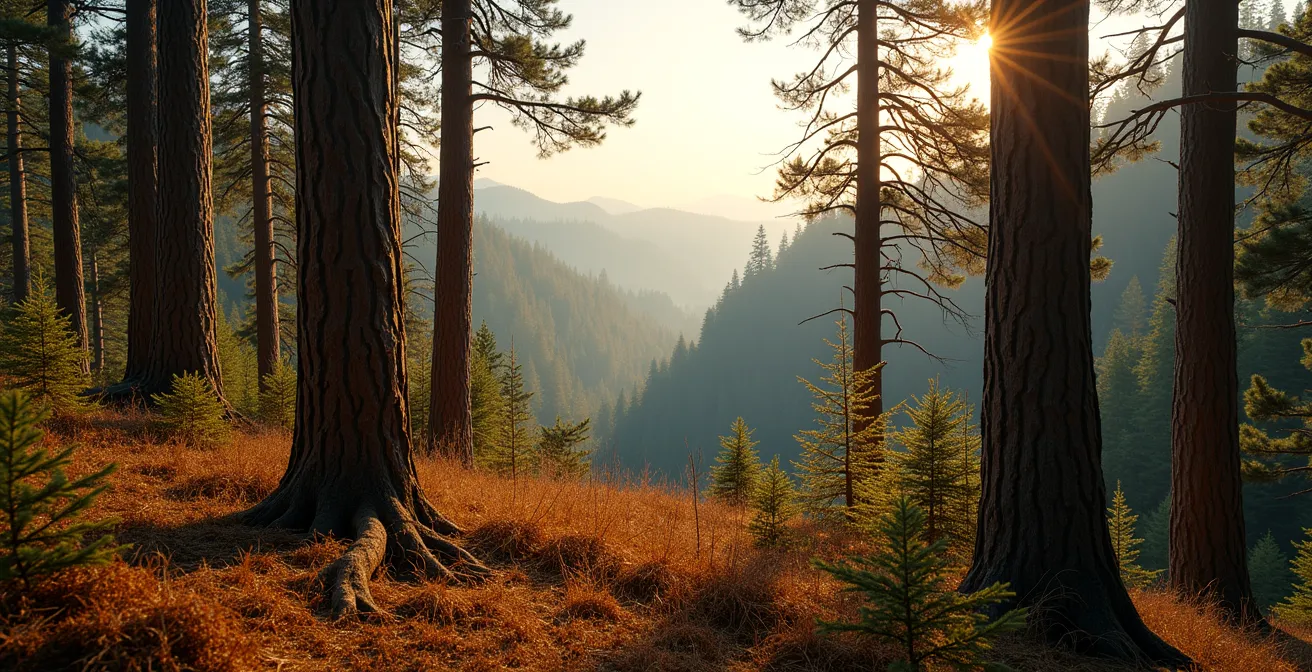
The health of these ancient trees is a barometer for the health of the entire ecosystem, and their decline is a warning we cannot afford to ignore.
Carbon Sentinels: Why Are Old-Growth Forests Crucial for BC’s Climate?
The value of British Columbia’s old-growth forests extends far beyond their majestic beauty. These ecosystems are powerful, globally significant carbon sentinels. Unlike younger forests, which sequester carbon rapidly but also release it as they mature, old-growth forests represent vast, stable reservoirs of stored carbon. The immense biomass of the trees themselves, combined with the deep, rich organic soils and associated wetlands, holds centuries of accumulated carbon out of the atmosphere. Protecting these forests is not just a matter of preserving biodiversity; it is a critical climate action. When an old-growth forest is logged or degraded, much of this stored carbon is released, contributing directly to greenhouse gas emissions.
Invasive species represent a direct threat to this carbon storage capacity. As noted by Forest Professionals BC, “Invasive species can reduce biodiversity, increase soil erosion, introduce diseases, and damage forests. They compete with natural forest vegetation and tree seedlings for resources.” This competition slows the growth of native trees, reducing the forest’s overall capacity to sequester new carbon. Furthermore, some invasive species can alter soil chemistry, accelerating the decomposition of organic matter and releasing stored carbon. This is especially true in the critical wetland areas often found within these forest landscapes. The Nature Trust of BC highlights that healthy wetlands can store between 81 to 216 metric tons per acre, acting as incredibly dense carbon sinks. By preventing the introduction and spread of invasives, we are directly defending one of the world’s most effective natural climate solutions.
Every effort to maintain the integrity of these old-growth ecosystems is a direct investment in a more stable global climate for future generations.
Why Are Wildlife Corridors Essential for Grizzly Bear Survival in Parks?
National and provincial parks, while large, are often not large enough on their own to support healthy, genetically diverse populations of wide-ranging species like grizzly bears. These animals require vast territories to find food, mates, and seasonal habitats. The parks can become “islands” of habitat, surrounded by a “sea” of human development, highways, and resource extraction. This is where wildlife corridors become essential. These are protected tracts of land that connect larger habitat blocks, allowing animals to move safely between them. For grizzly bears, these corridors are lifelines that prevent populations from becoming small, isolated, and vulnerable to inbreeding and local extinction.
The need for these corridors is tragically clear in the statistics. In southeastern BC’s Elk Valley, a critical grizzly habitat fragmented by highways and development, researchers have found that 40% of the region’s sub-adult grizzly bears (aged two to six) die each year, primarily due to human-caused mortality. These young, dispersing bears are the most likely to be using or attempting to cross human-dominated landscapes. Protecting and restoring corridors is the most effective way to reduce this mortality rate. Fortunately, conservation efforts are making a difference.
Case Study: The Kootenay Wildlife Corridor
In a landmark success for conservation in the Kootenays, The Nature Trust of BC, along with its partners, raised almost $4 million to protect 874 acres of crucial habitat. This acquisition secures a vital movement corridor for a multitude of species, including grizzly bears, elk, and mule deer. By protecting this land from development, the project ensures that animals can continue their seasonal migrations and maintain genetic exchange between populations, directly contributing to their long-term survival and the overall biodiversity of the region.
Supporting organizations that secure these lands and advocating for landscape-level planning that prioritizes connectivity are among the most impactful actions we can take for BC’s iconic wildlife.
Key Takeaways
- The health of BC’s rainforest is built on ecological interdependence, where salmon feed the trees and wildlife corridors sustain bear populations.
- You are a potential vector for invasive species; adopting strict “Clean, Drain, Dry” biosecurity protocols for your gear is a non-negotiable part of responsible travel.
- Your choices matter: supporting certified eco-operators and maintaining absolute vigilance with food and waste directly impacts the survival of wildlife.
Wildlife Photography Ethics: How Close Can You Legally Get to Northern Fauna?
For many visitors, capturing a stunning photograph of wildlife is a highlight of their trip to British Columbia. However, the pursuit of the “perfect shot” can lead to behaviour that is both unethical and illegal, causing significant stress to animals and putting both wildlife and people at risk. The key principle of ethical wildlife photography is that the well-being of the subject always comes before the quality of the photograph. This means using a telephoto lens to maintain a respectful distance, never baiting or calling to attract an animal’s attention, and being able to recognize the signs of stress in an animal (e.g., flattened ears, agitated movements, staring directly at you).
In British Columbia, these ethical guidelines are also backed by law. Specific legal distances are mandated to protect marine mammals from harassment, and severe penalties apply for approaching too closely. For terrestrial animals like bears, while a single legal distance is not always specified, the Wildlife Act makes it illegal to harass or disturb wildlife. Approaching an animal to the point where it alters its natural behaviour—such as stopping it from feeding, resting, or caring for its young—is considered harassment. Your responsibility also extends to preventing the spread of invasive species through your equipment. Remember to clean camera bags, tripods, and lenses between locations to avoid transporting seeds or pathogens. As the BC Ministry of Environment states, the stakes are high: ” Invasive species are recognized globally as the second greatest threat to biodiversity after direct habitat loss due to humans.”
To ensure you are always in compliance, be aware of these specific regulations:
- Maintain a minimum distance of 100 metres (about the length of a football field) from most whale species.
- This distance increases to 200 metres for all killer whales in BC’s southern resident critical habitat and 400m for all killer whales in southern BC coastal waters between Campbell River and just north of Ucluelet.
- For land animals like bears, a general rule of thumb is to stay at least 100 metres away. If the animal notices you, you are too close.
- Immediately report any suspected invasive species sightings using the provincial Report Invasives BC app on your smartphone.
Ultimately, the most beautiful wildlife photograph is one taken with respect, reflecting a moment in nature that you observed without altering it. By embracing this philosophy of stewardship in all your actions, you help ensure that the magnificent ecosystems of British Columbia’s coast will continue to thrive for generations to come.