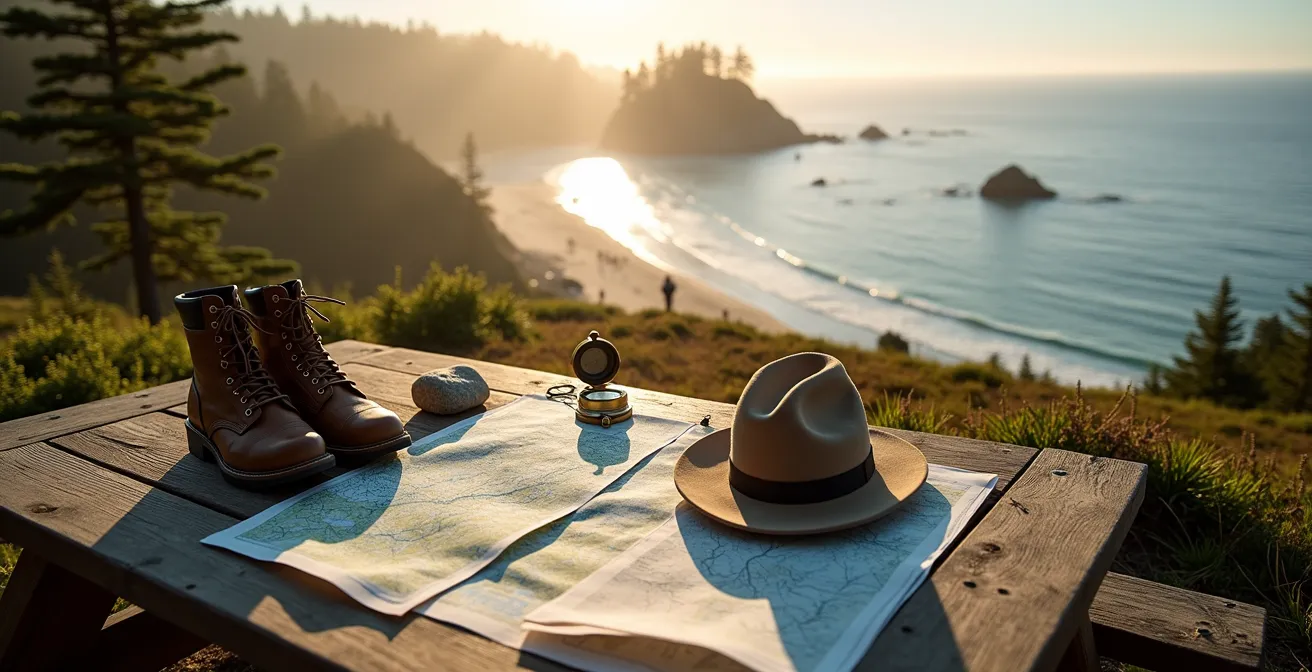
Securing a West Coast Trail permit is a strategic operation that hinges on preparation and understanding the system, not luck.
- Mastering the reservation system’s pressure points and timing is non-negotiable for success on launch day.
- Using British Columbia’s Juan de Fuca Trail as a full-scale “dress rehearsal” is the single best way to test your fitness and gear.
- A multi-layered approach to waterproofing and knee strengthening is essential to prevent trip-ending failures in the demanding coastal environment.
Recommendation: Begin your three-month physical training program and detailed gear audit immediately to be fully prepared for both booking day and the trail itself.
For any experienced Canadian hiker, the moment the clock ticks to 8:00 AM PT on a specific January morning, a wave of adrenaline hits. This is the moment the Parks Canada reservation system for the West Coast Trail (WCT) goes live, and with it, the chance to secure a spot on one of the world’s most iconic treks. You already know the common advice: create your account in advance, have your dates ready, and be fast. But for a trail where coveted summer spots vanish in under five minutes, this basic advice is simply not enough. It’s the equivalent of telling a marathon runner to “just run fast.”
The truth is, experienced hikers fail to get permits every year because they treat it like a lottery. They hope for the best. A successful West Coast Trail expedition, however, begins months before you ever touch the muddy soil of Vancouver Island. It requires a mindset shift from hopeful applicant to strategic operator. The key isn’t just about clicking faster; it’s about understanding the system’s pressures, anticipating the trail’s unique demands, and engineering your entire preparation—from physical training to gear selection—for resilience.
This guide moves beyond the platitudes. As a permit strategy expert, my goal is to provide an insider’s framework. We’ll deconstruct the reservation process, detail the physical and mental conditioning required to conquer its infamous ladders and mud, and outline the gear strategies that separate a successful thru-hike from a miserable, or even dangerous, ordeal. This is your operational blueprint for turning a bucket-list dream into a well-executed reality.
To fully appreciate the scale and beauty of the challenge ahead, the following video offers a stunning visual immersion into the landscapes and atmosphere of the West Coast Trail, perfectly complementing the strategic advice in this guide.
This comprehensive guide is structured to walk you through every critical phase of your preparation. From the strategic nuances of the booking system to the physical and logistical demands of the trail itself, each section provides actionable intelligence to maximize your chances of success.
Summary: A Strategic Blueprint for the West Coast Trail
- Why Do Reservations Open in January for Summer Hikes?
- How to Train for Mud and Ladders on the West Coast Trail?
- West Coast Trail vs. Juan de Fuca Trail: Which Is Harder?
- The “Ghost Camping” Risk: Why Rangers Evict hikers Without Permits?
- Ultralight Gear: How to Cut 5 lbs from Your Base Weight for 7 Days?
- How to Strengthen Your Knees for Steep Descents with a Heavy Pack?
- How to Waterproof Your Backpack for Multi-Day Coastal Treks?
- Hiking Pacific Rim National Park Reserve: How to Prep for Heavy Rain?
Why Do Reservations Open in January for Summer Hikes?
The January reservation launch isn’t an arbitrary date; it’s a core component of a managed access system designed for two purposes: ecological preservation and hiker safety. The West Coast Trail is a fragile ecosystem within the Pacific Rim National Park Reserve. The permit system is the primary tool Parks Canada uses to control human impact. By releasing all permits for the May 1 to September 30 season at once, the system ensures a predictable and limited number of hikers are on the trail at any given time.
From a strategic standpoint, you must understand the quota distribution. A total of 70 daily permits are available: 25 starting from the south at Gordon River, 25 from the north at Pachena Bay, and 20 from the midpoint at Nitinaht Narrows. The most sought-after dates in July and August are known to sell out within the first five minutes of the system opening. The January launch provides a crucial 4-5 month window for successful applicants to physically train, procure specialized gear, and arrange complex travel logistics to Vancouver Island. It transforms the hike from a spontaneous trip into a deliberate expedition.
Thinking that you can simply show up and get a spot is a critical error. The high demand and limited inventory mean that preparation for booking day is as important as preparation for the hike itself. The system is designed to reward those who plan meticulously. Your first strategic move is to create your Parks Canada account well before reservation day, have multiple date and entry point combinations ready, and understand that you are competing with thousands of others for a very limited resource.
How to Train for Mud and Ladders on the West Coast Trail?
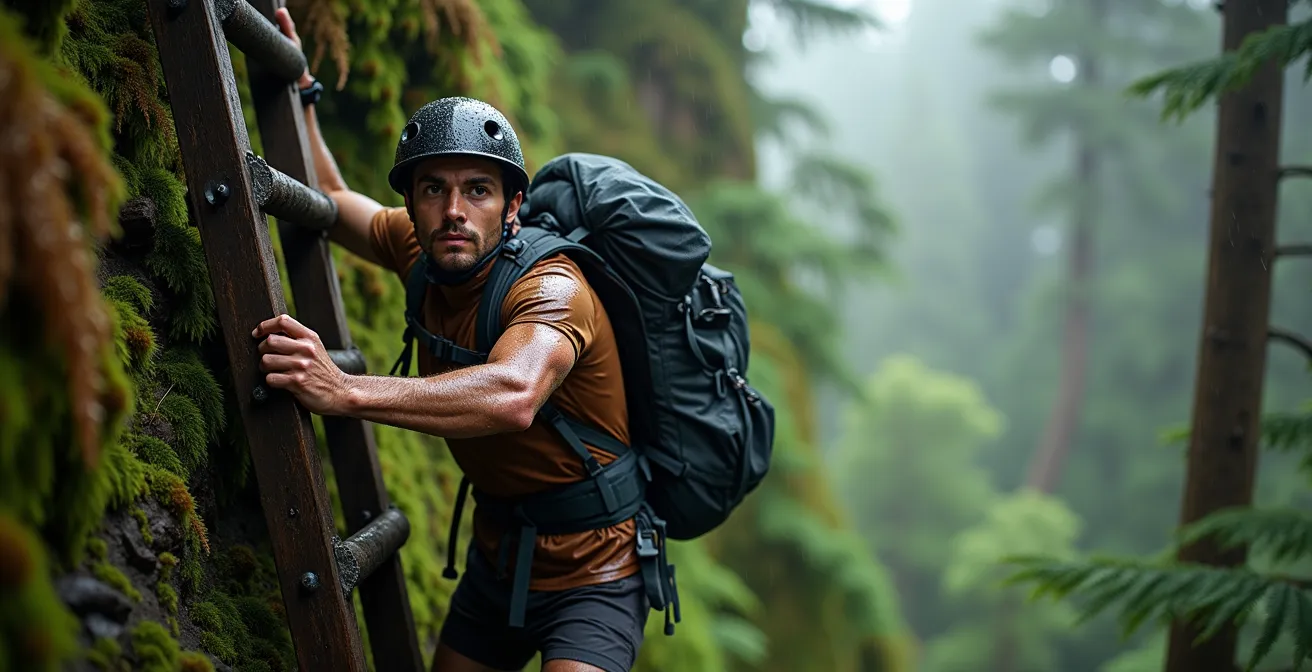
The physical challenge of the West Coast Trail is legendary, defined by two elements: relentless mud and vertical ladders. Your training must specifically target these obstacles. The trail features over 100 ladder systems, with more than 70 considered major ascents or descents. This isn’t just a test of leg strength; it’s a full-body workout that requires balance, upper body power, and mental confidence, all while carrying a heavy pack.
A generic cardio program is insufficient. Your training must be a “resilience engineering” project for your body. According to an official 3-month training program recommended by Parks Canada, your focus should be on building functional strength and endurance. This includes:
- Weighted Pack Training: Start a comprehensive strength and cardio program at least three months out. Crucially, practice hiking on varied terrain with a weighted pack, aiming for a load that is 30% of your body weight.
- Ladder Simulation: Find opportunities to practice climbing ladders with your fully loaded pack. This builds not just strength, but the balance and confidence needed to handle wet, slippery rungs.
- Strength and Endurance: Incorporate stair workouts, hill climbs, and squats to build quad and glute strength for both the ladders and the steep, muddy terrain. Add upper body exercises like pull-ups or lat pulldowns to prepare for the trail’s cable car crossings.
- Conditioning for the Wet: Whenever possible, train in wet and rainy conditions. This is the only way to truly test your rain gear’s performance and build the mental toughness required to hike for days in the rain.
This photograph captures the essence of this vertical challenge, showing a hiker navigating one of the trail’s iconic ladder systems.
Failing to specifically train for these unique demands is a primary cause of injury and early evacuation. Your body must be as prepared for the vertical climbs as it is for the horizontal distance.
West Coast Trail vs. Juan de Fuca Trail: Which Is Harder?
For hikers planning a WCT trip, a common question arises: how does it compare to its southern neighbour, the Juan de Fuca Marine Trail (JDF)? While both offer stunning Vancouver Island coastal scenery, the WCT is unequivocally the more demanding and logistically complex undertaking. The difficulty lies not just in its length but in its mandatory technical obstacles and restrictive access.
The smartest strategic move an aspiring WCT hiker can make is to view the JDF not as an alternative, but as an essential, full-scale dress rehearsal. It provides the perfect environment to test your body, your gear, and your mental fortitude against similar coastal terrain without the high stakes of the WCT’s permit lottery and cost. As this comparative analysis shows, the differences are stark:
| Feature | West Coast Trail | Juan de Fuca Trail |
|---|---|---|
| Distance | 75 km (unofficially 85+ km) | 47 km |
| Duration | 5-7 days typical | 3-4 days typical |
| Permit System | Mandatory reservation, sells out in minutes | No reservation required |
| Cost | $325.25 CAD per person (2026) | $10 CAD per night camping |
| Difficulty | Very challenging – 100+ ladders, cable cars | Moderate – fewer technical obstacles |
| Rescue Rate | 1% of hikers evacuated annually | Significantly lower evacuation rate |
Case Study: The JDF as a Strategic Training Ground
Many experienced Canadian hikers use the Juan de Fuca Trail as a critical “dress rehearsal” for the West Coast Trail. Its accessibility and lack of a reservation system make it an ideal, low-risk environment for a multi-day shakedown hike. Hikers consistently report that completing the JDF first allowed them to identify gear failures (like inadequate waterproofing), dial in their pack weight, and accurately gauge their physical readiness for the WCT’s greater demands. This pre-hike rehearsal significantly boosted their confidence and success on the more challenging trail.
Ultimately, while the JDF is a challenging hike in its own right, the WCT operates on a higher level of difficulty due to its length, technical sections, and the sheer commitment required just to get to the trailhead.
The “Ghost Camping” Risk: Why Rangers Evict hikers Without Permits?
Given the difficulty of securing a permit, some hikers may contemplate “ghost camping”—attempting the trail without a valid reservation. This is not just ill-advised; it is a serious violation with severe consequences. From a Parks Canada perspective, enforcement is strict and absolute for reasons of safety, ecological management, and respect. Park Rangers conduct daily permit checks at entry points and campsites, and anyone found without a permit will be evicted from the trail, potentially facing significant fines.
The permit system is about more than just crowd control. A permit is a formal agreement and a critical piece of your safety infrastructure. Hiking without one has serious implications:
- Legal Violations: Hiking without a permit violates the Canada National Parks Act. As enforcement protocols outline, this can result in fines exceeding $5,000 CAD and immediate removal from the trail.
- Rescue and Safety: Your permit fee helps fund the Joint Rescue Coordination Centre (JRCC Victoria). Being on the official manifest is crucial. Without a permit, you are invisible to rescuers, and you could be held fully liable for the high costs of a search and rescue operation.
- Respect for First Nations: Your permit signifies your commitment to respecting the land and its heritage. As Parks Canada officially states, this is a cornerstone of the hiking experience.
The trail passes through the traditional territories of the Huu-ay-aht, Ditidaht, and Pacheedaht First Nations. A permit is a formal agreement to respect their land.
– Parks Canada, West Coast Trail Official Guide 2025
The daily limit of 70 hikers is a hard ceiling designed to protect the fragile environment and ensure a quality wilderness experience. Attempting to bypass this system is a risk that is simply not worth taking.
Ultralight Gear: How to Cut 5 lbs from Your Base Weight for 7 Days?
On the West Coast Trail, every pound in your pack feels like five by the time you reach the top of a 100-rung ladder. While many experienced hikers arrive with packs in the 32-36 lbs (14-16 kg) range, achieving a lighter base weight is a massive strategic advantage. Shaving even five pounds can dramatically improve your endurance, reduce strain on your knees, and make the entire experience more enjoyable. This requires a ruthless audit of your gear, prioritizing multi-use items and modern materials.
Here are several high-impact, WCT-specific strategies for cutting weight without compromising safety in the wet coastal environment:
- Rethink Insulation: While down is lighter, synthetic insulation is a safer choice for BC’s high humidity as it retains warmth when damp. The slight weight penalty is worth the safety margin.
- The Canadian Pack Liner: Ditch heavy, often unreliable, external pack covers. The gold standard among Canadian hikers is lining your pack’s interior with a heavy-duty contractor bag from Canadian Tire. It’s lighter, cheaper, and 100% waterproof.
- Share and Conquer: The easiest weight to save is gear you don’t carry. Coordinate with your group to share a single stove, water filter, first aid kit, and bear rope system.
- Rent, Don’t Carry: Heavy or infrequently used items like bear canisters and satellite messengers can be rented in Port Renfrew or Victoria, saving you from carrying them on a plane.
- Systematize Rain Gear: Instead of one heavy rain jacket, consider an ultralight shell paired with an emergency poncho. The poncho can double as a pack cover or a small tarp in camp.
Focusing on the textures and materials of ultralight gear reveals how modern design sheds critical ounces without sacrificing performance.

Ultimately, your goal should be a total pack weight that does not exceed 30% of your body weight. This is a critical threshold for injury prevention on such a demanding trail.
How to Strengthen Your Knees for Steep Descents with a Heavy Pack?
The relentless up-and-down of the West Coast Trail, particularly the jarring descents down steep ladders and muddy slopes, places immense stress on the knees. Knee pain is one of the most common complaints and a leading reason for hikers needing assistance. In fact, Parks Canada reports that about 1% of hikers require evacuation annually, with joint injuries being a significant factor. Proactively strengthening your knees is not just about comfort; it’s a critical safety measure.
The key to building resilient knees lies in eccentric muscle contractions—the motion of a muscle lengthening under load. This is precisely what your quadriceps do when you control a steep descent. Incorporating eccentric exercises into your training is vital. This can be as simple as focusing on the “down” phase of a squat or, more effectively, practicing downhill walking with a loaded pack. Trekking poles are also non-negotiable; they transfer a significant portion of the load from your knees to your upper body, drastically reducing impact.
Case Study: Eccentric Training Success in the Prairies
A family from Saskatchewan successfully prepared for the WCT by innovating their training in a flat landscape. They used the main hill at a local park in Regina for targeted eccentric training. For months, they performed multiple repetitions of controlled downhill walks with fully loaded backpacks, specifically focusing on slow, deliberate steps to strengthen their leg muscles for descents. This hyper-focused training paid off: despite the WCT’s notoriously challenging terrain and hundreds of ladder rungs, the entire family completed the trek without any knee injuries, proving that specific, targeted exercises are more important than access to mountains.
Don’t wait for the trail to reveal a weakness in your kinetic chain. Start a targeted strengthening program three months out, focusing on single-leg squats, weighted step-downs, and plenty of downhill hiking. Your knees will thank you for it.
How to Waterproof Your Backpack for Multi-Day Coastal Treks?
The west coast of Vancouver Island is one of the wettest places in North America. The Pacific Rim National Park Reserve receives an average of 330 cm (130 inches) of rain annually. On the WCT, you must operate under the assumption that it will rain, and likely rain hard. A “water-resistant” pack or a simple external pack cover is utterly insufficient. A single gear failure in your waterproofing system can lead to a wet sleeping bag, failed electronics, and a miserable, potentially hypothermic, experience. A multi-layer, redundant system is the only professional approach.
Your goal is to create a series of barriers, ensuring that even if one layer fails, your critical gear remains bone-dry. This system approach is far more reliable than relying on a single piece of equipment.
Action Plan: The Multi-Layer Waterproofing System
- Primary Liner: Before packing anything, line the entire interior of your backpack with a heavy-duty, unscented contractor bag. This is your main defense and is far more reliable than an external cover, which can snag on branches.
- Critical Gear Isolation: Double-bag your most critical items. Your sleeping bag and spare clothing must go into their own waterproof dry sack *before* being placed inside the main pack liner.
- Electronics & Documents: Isolate all electronics, maps, and your precious permit in high-quality Ziploc bags or smaller, dedicated dry sacks. The official WCT waterproof map is not as waterproof as you’d hope—it needs extra protection.
- System Redundancy: Pack at least one spare contractor bag. They are light and invaluable if your primary liner gets punctured mid-trip.
- Maintenance Protocol: After a day of hiking in mud and sand, take a moment in camp to clean the joints of your trekking poles. This prevents them from seizing up, ensuring they are functional when you need them most for slippery descents.
This systematic approach ensures that even in a sustained downpour, your essential survival gear—your shelter and your warm layers—remains completely protected.
Key Takeaways
- Strategic Booking: Success on reservation day is about strategy, not speed. Understand the quota system, have multiple plans, and be ready to execute with precision.
- The JDF Rehearsal: Treat the Juan de Fuca Trail as a mandatory, full-scale dress rehearsal to test your physical limits and gear systems in a lower-risk environment.
- Resilience Engineering: Your primary goal in training and gear selection is to build redundancy and resilience against the trail’s three main threats: vertical strain (ladders), joint impact (descents), and pervasive dampness (rain).
Hiking Pacific Rim National Park Reserve: How to Prep for Heavy Rain?
All the strategic planning for permits, the meticulous gear selection, and the dedicated physical training culminate in one reality: you must be prepared to function and thrive in heavy, persistent rain. The final layer of preparation is mental. It’s about accepting the wet, coastal environment for what it is and having the systems and mindset to handle it safely. The difference between an epic adventure and a miserable ordeal on the West Coast Trail is often how a hiker manages moisture and morale.
Beyond keeping your gear dry, you must have a plan for managing your own body temperature and well-being. This includes wearing layers of synthetic or wool clothing that insulate when wet (cotton is absolutely forbidden), having a reliable stove to make hot drinks and food, and a diligent camp routine to air out damp gear whenever a dry spell presents itself. Underestimating the cold that comes with the wet can have serious consequences. The Parks Canada Safety Team is unequivocal about this risk.
Incidents of hypothermia and physical injury increase significantly during prolonged wet periods. Be prepared for cold wet conditions even during the warmest summer months.
– Parks Canada Safety Team, West Coast Trail 2025 Hiker Preparation Guide
Embrace the rain as part of the experience. The moody, fog-shrouded coastline is part of the trail’s profound beauty. But respect its power. A hiker who is well-fed, relatively dry, and warm is a hiker who makes good decisions. A cold, wet, and demoralized hiker is a liability to themselves and their group. Your preparation is your primary defense against becoming a statistic.
Your West Coast Trail journey begins not at the trailhead, but with the first step of your preparation. Use this strategic framework to turn your dream trip into a successful, safe, and unforgettable reality.