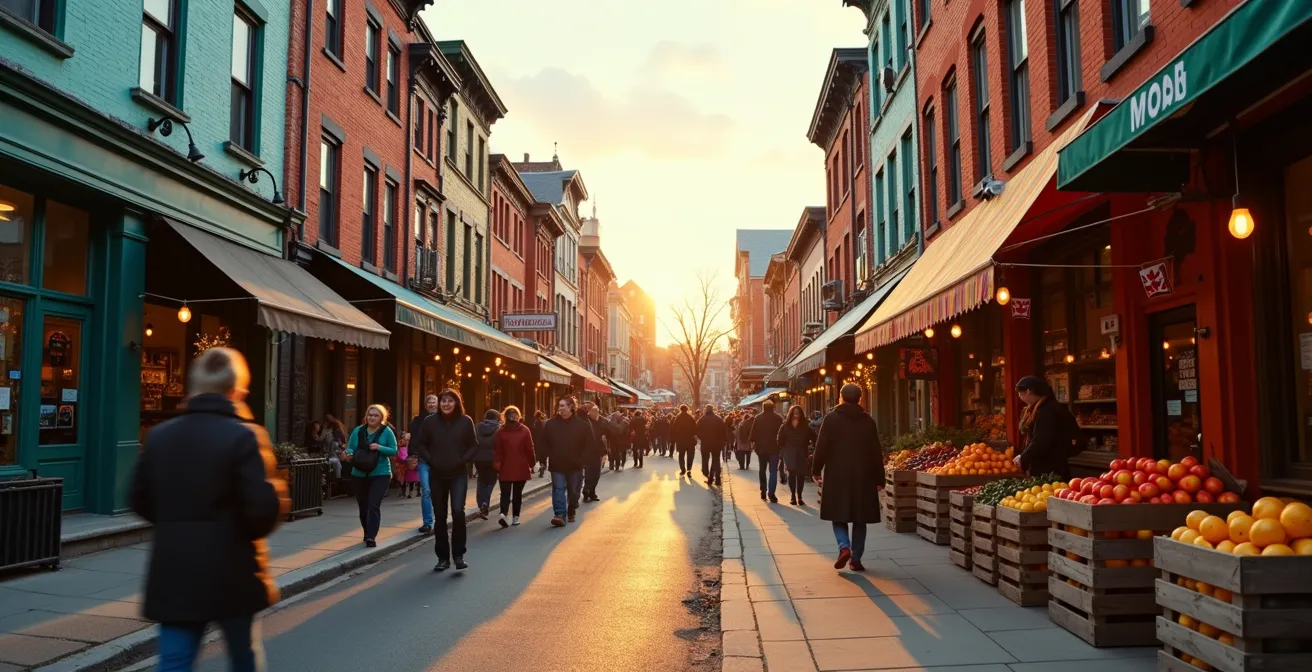
Don’t let Kensington Market’s vibrant chaos intimidate you. The key to exploring it like a local isn’t just knowing what to eat, but learning how to read it. This guide reframes the market from a confusing collection of stalls into a living archive of Toronto’s immigrant history, where every dish and laneway tells a story. By understanding this “food language,” you’ll navigate the market with confidence and uncover its most authentic flavours.
The first encounter with Toronto’s Kensington Market can be overwhelming. For a foodie traveler, it promises an authentic taste of the city, yet its narrow, crowded streets, a cacophony of languages, and a dizzying array of vendors can feel intimidating. The typical advice is to “be adventurous” or simply “get lost” in its laneways. But this approach often leads to sensory overload, leaving you wondering if you’ve truly experienced the heart of the neighbourhood or just skimmed its chaotic surface.
Many guides will give you a list of “must-try” foods, from Jamaican patties to peameal bacon, treating the market like a simple checklist. While these are delicious, this perspective misses the point. The real magic of Kensington lies not just in its individual dishes, but in their context. It’s a place shaped by successive waves of immigrant communities, from its origins as a Jewish market to the influx of Caribbean, Latin American, and Asian cultures that define it today.
But what if the secret to navigating this beautiful chaos wasn’t about having a map, but a new lens? This guide offers a different approach. We’ll explore Kensington Market as a living archive of Toronto’s food history. The key is to learn to read its unique “food language”—to understand that the seemingly random assortment of shops is a narrative of cultural adaptation and community resilience. Instead of just tasting, you’ll learn to see the stories behind the food.
This article will guide you through comparing Kensington to other food scenes, decoding its unwritten rules, and understanding its place in the city’s cultural fabric. By the end, you’ll be able to move beyond the intimidation and explore this National Historic Site with the confidence and insight of a local.
Summary: Dining in Toronto: How to Explore Kensington Market Like a Local?
- Why Does Richmond, BC Have the Best Asian Food Scene in North America?
- How to Order Dim Sum for the First Time Without Confusion?
- Little Italy or Chinatown: Which District Offers Better Value for Lunch?
- The “DineSafe” Sticker: What Does a Yellow Sign Actually Mean for Tourists?
- Visiting During Caribana: How to Plan Around Road Closures?
- Why Did Toronto’s Distillery District Transform From Industrial Wasteland to Hub?
- Why Do Cities Subsidize Free Concerts During Tourist Season?
- How to Book Ethical Indigenous Tourism Experiences in British Columbia?
Why Does Richmond, BC Have the Best Asian Food Scene in North America?
To truly understand Kensington Market’s unique character, it’s helpful to compare it to another Canadian food giant: Richmond, British Columbia. Richmond is often lauded as North America’s capital of Asian, particularly Chinese, cuisine. Its strength lies in its incredible depth and authenticity. There, you’ll find restaurants dedicated to highly specific regional Chinese dishes, often run by first-generation immigrants serving recipes true to their origins. It’s a modern landscape of polished shopping centers and specialized eateries.
Kensington Market operates on a completely different principle. It’s not about depth in one culture, but about the incredible breadth and fusion across many. While Richmond offers a masterclass in regional Chinese food, Kensington is a living museum of Toronto’s immigration story. Since the 1800s, this area has been a landing pad for newcomers, from Irish and Jewish communities to the Caribbean, Latin American, and Asian families who shape it today. This history is baked into its food scene.
Here, you’ll find second and third-generation immigrant chefs creating fusion dishes that are uniquely Torontonian. The environment reflects this history: instead of modern malls, you navigate an open-air market set within Victorian-era buildings. This isn’t a planned food district; it’s an organic, ever-evolving neighbourhood that has resisted gentrification to remain a hub of affordable, authentic food that reflects one of the world’s most multicultural cities. It’s this historic, multi-layered diversity that sets it apart.
So, while Richmond may offer a more focused deep-dive into Asian cuisine, Kensington provides a vibrant, historical tapestry of global food cultures coexisting and creating something entirely new.
How to Order Dim Sum for the First Time Without Confusion?
The idea of ordering dim sum for the first time—with its rolling carts, specific etiquette, and rapid-fire pace—can be daunting. That same feeling of happy confusion is what many first-timers experience in Kensington Market. The secret is to reframe your thinking. Don’t see the market as a place to have one big meal; think of it as a “global dim sum” experience, where you sample small, perfect bites from a dozen different “carts” or vendors.
This approach transforms the market’s chaos from a source of stress into a strategy. Instead of committing to one restaurant, you build your own tasting menu. A Jamaican patty here, a taco there, a Brazilian pastel to finish. This not only allows you to sample the incredible diversity but also mirrors how locals interact with the market—as a place for a quick, delicious, and varied snack run. This interactive and dynamic way of eating is central to the market’s spirit.
The “dim sum” mindset requires embracing the unwritten rules of Kensington’s counter-service culture. This is where you connect directly with the people making the food, often in loud, bustling environments. The exchange is part of the experience.
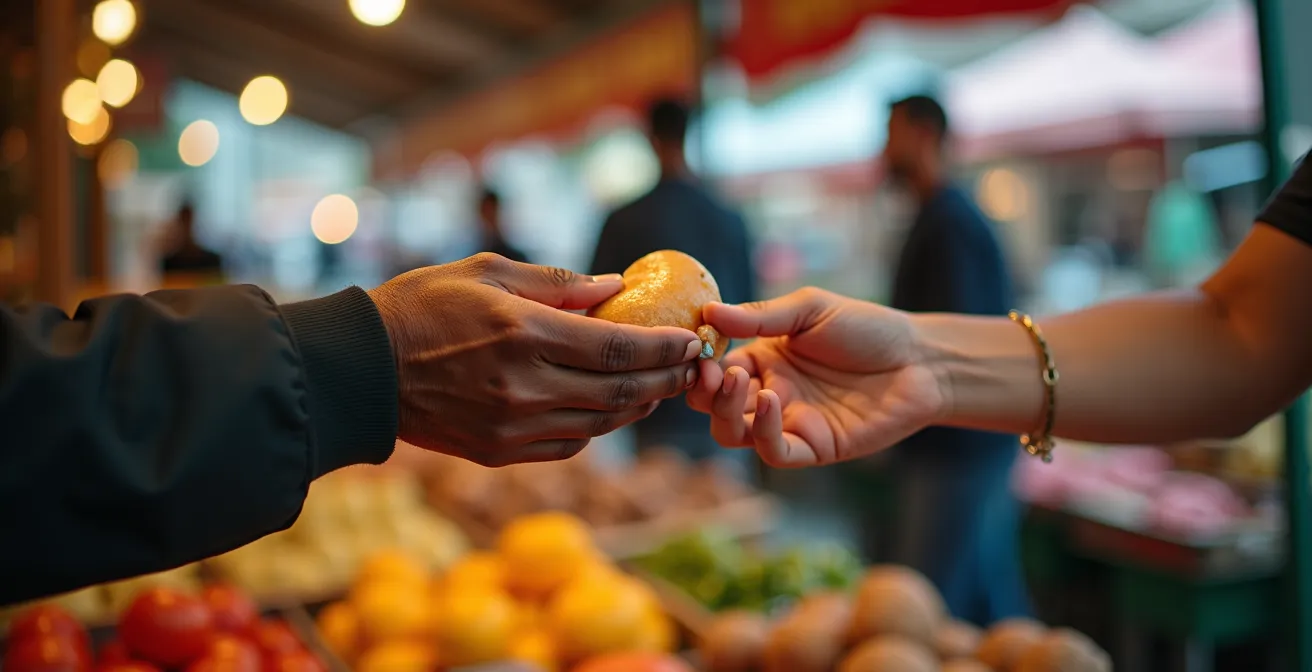
This close-up, human interaction is the heart of the market. It’s fast, it’s authentic, and it requires a bit of preparation to navigate smoothly. To help you master this, here are the essential points to keep in mind.
Your Action Plan: Mastering Kensington’s Counter-Service Culture
- Cash is King: Check your wallet before you go. Many vendors are cash-only or have debit minimums. While there’s an ATM on Spadina Avenue, having small bills ready makes every transaction faster.
- Embrace the Chaos: Prepare to be assertive. At popular spots, you may need to speak up to place your order over the noise. Navigating crowded, narrow lanes is part of the charm, not a flaw.
- Sample Strategically: Adopt the “global dim sum” mindset. Order small portions from multiple vendors instead of filling up at your first stop. This is the best way to experience the market’s full range.
- Check for Pedestrian Sundays: If you can, plan your visit on the last Sunday of the month between May and October. The main streets are closed to traffic, making it much easier to wander and explore.
- Mix and Match: Create your own unique tasting menu. The classic Toronto combo of a spicy Jamaican patty wrapped in sweet coco bread is a great place to start, followed by something completely different, like a Mexican empanada.
Ultimately, treating the market like a dim sum hall turns an overwhelming space into an exciting culinary adventure, one delicious and affordable plate at a time.
Little Italy or Chinatown: Which District Offers Better Value for Lunch?
When planning a food-centric day in Toronto, many visitors weigh their options: a classic pasta dish in Little Italy, a sprawling dim sum feast in Chinatown, or the eclectic offerings of Kensington Market. While each district has its charm, when it comes to sheer value and variety, Kensington holds a distinct advantage. It’s a place where a modest budget can unlock a world of flavours, a claim supported by its incredible density of culinary options.
The market is home to 240+ shops representing over 30 distinct cultures, all packed within a tight, walkable radius. This isn’t just a number; it translates into a real-world advantage for the budget-conscious foodie. Unlike Little Italy, where a $15 lunch might get you a single pasta dish, or Chinatown, where it could be a large bowl of noodles, that same $15 in Kensington can buy you a multi-course, multi-cultural meal. You can grab two or three different small plates, effectively creating your own international food tour for the price of a single sit-down entrée elsewhere.
This value proposition is about more than just cost; it’s about the richness of the experience. The atmosphere in Kensington is bohemian and unpretentious, with a focus on street art, vintage shops, and the food itself, rather than the polished patio dining of Little Italy or the traditional restaurant settings of Chinatown. It’s a hands-on, choose-your-own-adventure style of dining.
To put this into perspective, let’s break down what a typical lunch budget can get you across these three iconic Toronto food neighbourhoods.
| District | What $15 Gets You | Cultural Variety | Atmosphere |
|---|---|---|---|
| Kensington Market | 2-3 small plates from different vendors OR 1 hearty meal + drink | 30+ cultures (Caribbean, Latin, Asian, European) | Bohemian, vintage shops, street art |
| Little Italy | 1 pasta dish OR pizza slice + coffee | Primarily Italian with some modern cafes | Polished, patio dining, upscale |
| Chinatown | 1 large noodle bowl + dim sum OR 2 dishes | Chinese regional cuisines + Vietnamese | Busy, traditional, authentic |
This isn’t to say the other districts aren’t worth a visit, but for an experience that is both affordable and endlessly varied, Kensington Market stands in a category of its own.
The “DineSafe” Sticker: What Does a Yellow Sign Actually Mean for Tourists?
One of the charming, yet potentially concerning, aspects of Kensington Market for a first-time visitor is the “grungy” aesthetic of some stalls. In a world of sterile, uniform restaurant chains, the rustic, historic, and sometimes cluttered appearance can be mistaken for a lack of cleanliness. This is where understanding Toronto’s DineSafe program becomes crucial. That small, colour-coded sticker in the window is a tourist’s best friend for decoding the safety behind the authentic facade.
Launched by Toronto Public Health, DineSafe is a food safety inspection and disclosure program. Every establishment that serves food is subject to regular, unannounced inspections. The results are made public through a simple system: a green sign means pass, a yellow sign means conditional pass, and a red sign means closed. For a tourist, seeing a green pass on a rustic-looking food stall is a powerful reassurance. It demonstrates that beneath the vintage exterior, the establishment meets Toronto’s rigorous public health standards. In fact, the program has been a huge success; one review showed that food safety compliance improved to over 90% after its implementation.
So what does a yellow sign mean? It’s not a sign to run away. A yellow sign indicates a conditional pass, meaning inspectors found one or more significant infractions that need to be corrected. The establishment is re-inspected within 24-48 hours to ensure compliance. While many locals might choose to wait for the green sign to return, a yellow sign is a sign of transparency and active oversight, not necessarily a sign of danger. It proves the system is working to hold every vendor, from gleaming restaurants to tiny market stalls, to the same high standard.
In Kensington, the DineSafe sticker is the great equalizer. It allows you to confidently choose your food based on flavour and appeal, knowing that an active public health system is ensuring the safety fundamentals are in place, regardless of outward appearances.
Visiting During Caribana: How to Plan Around Road Closures?
Visiting Toronto during the Toronto Caribbean Carnival, widely known as Caribana, is an electrifying experience. The city comes alive with the sounds of soca and steelpan, culminating in a spectacular Grand Parade. However, for a tourist, this major event brings logistical challenges, especially massive road closures along the waterfront. This is where Kensington Market transforms from a daily food destination into a strategic home base for experiencing Toronto’s Caribbean culture.
Instead of getting stuck in traffic or paying inflated festival prices, a savvy visitor can use Kensington Market as an anchor. The market is the year-round heart of Toronto’s Caribbean community, a place where you can find authentic food and culture any day of the week. During Caribana, it becomes a haven—easily accessible via public transit like the 505 Dundas or 506 College streetcars, which bypass the main parade route closures. You can soak up the festival atmosphere in the morning and then retreat to Kensington for a more relaxed and affordable lunch.
The market offers a “Caribbean Food Trail” in miniature. You can start with a fresh, spicy beef patty from Golden Patty, move on to a hearty jerk chicken meal from a corner shop, and wash it all down with a tropical drink. It’s the same vibrant culture that the festival celebrates, but in a more intimate, accessible, and budget-friendly setting. The air is thick with the smell of allspice and thyme, a sensory preview of the flavours that define the celebration.
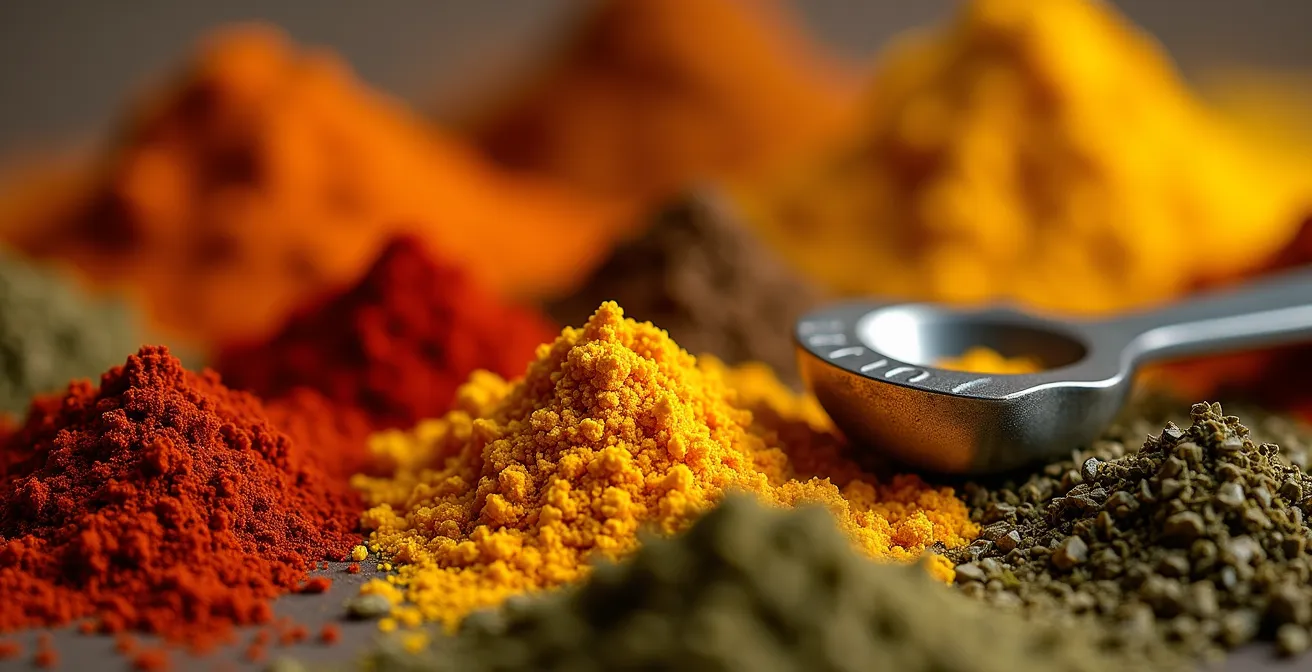
This strategy allows you to enjoy the best of both worlds: the high-energy spectacle of the parade and the authentic, everyday flavour of the community that drives it. It’s about planning smart to maximize your cultural immersion while minimizing logistical headaches.
This approach not only solves the problem of road closures but deepens your appreciation for the culture by connecting you directly to its community roots.
Why Did Toronto’s Distillery District Transform From Industrial Wasteland to Hub?
To fully grasp the soul of Kensington Market, it’s essential to contrast its evolution with another of Toronto’s famed historic areas: the Distillery District. The Distillery District is a stunning success story of urban renewal—a derelict collection of Victorian industrial buildings transformed into a polished, pedestrian-only village of galleries, high-end boutiques, and restaurants. This transformation was a top-down, corporate-led redevelopment. It was a planned, curated project designed to create a premier heritage destination.
Kensington Market’s story is the polar opposite. Its preservation and character are the result of bottom-up, community-led activism. In the 1960s, there were official plans to demolish Kensington’s small, “slum-like” houses for large apartment projects. These plans were defeated by community opposition, championed by figures like future mayor David Crombie, who opposed such massive urban restructuring. This victory set the stage for Kensington’s organic evolution.
This spirit of resistance is not just a thing of the past. When corporate giant Nike attempted to open a store in the market, the community’s rejection was so fierce—famously involving protests with paint-splattered shoes—that the store was a spectacular failure. This event cemented Kensington’s identity as a fiercely independent enclave. Unlike the curated perfection of the Distillery, Kensington’s magic lies in its lived-in, slightly messy, and actively contested nature. Its designation as a National Historic Site of Canada in 2006 wasn’t for a perfectly preserved past, but for its continuous history as a dynamic, working-class, immigrant community hub.
The Distillery District is a beautiful place to visit, but Kensington Market is a living, breathing neighbourhood to experience. Its authenticity isn’t a design choice; it’s the hard-won result of a community that has consistently chosen character over corporate polish.
Why Do Cities Subsidize Free Concerts During Tourist Season?
Many cities subsidize cultural events like free concerts to attract tourists and create a vibrant atmosphere. They invest public money to manufacture a “vibe.” Kensington Market achieves this same vibrancy, but in a completely organic way. The “free concerts” of Kensington are not subsidized events; they are the spontaneous street performances that erupt daily, reaching their peak during the much-loved Pedestrian Sundays.
Held on the last Sunday of each month from May to October, Pedestrian Sundays are the ultimate expression of the market’s community-driven spirit. The streets are closed to cars, and the entire neighbourhood transforms into a stage. You’ll find steel drum players on one corner, a folk singer on another, and a puppeteer entertaining children in Bellevue Square Park. This isn’t a city-programmed festival; it’s an open invitation for artists to share their work and for the community to gather. The “show” is the interactive symphony of vendors, shoppers, and performers all co-existing.
For a visitor, this is where the market’s soul is most visible. It’s a living demonstration of the bottom-up culture we’ve discussed. The vibrancy isn’t a tourist attraction; it’s the natural state of a community that values expression and interaction over orderly commerce. Supporting this micro-economy is as simple as bringing small bills to tip the performers whose talent makes the experience so memorable. You’re not just a spectator; you’re a participant in this unique cultural ecosystem.
The best day to visit Kensington is arguably a Pedestrian Sunday, as it’s when the market’s performance culture is in full swing. These events create what is effectively one of Toronto’s most authentic and beloved street performance series, all without a single dollar of city subsidy for the performances themselves.
This is the true return on investment for the community: a culture so strong and appealing that it sustains itself, drawing people in without the need for an official program.
Key Takeaways
- Kensington’s value is its multicultural breadth and fusion, contrasting with the focused depth of other food scenes.
- Navigate the market like a “global dim sum,” sampling small bites from many vendors to embrace its diversity.
- The market’s organic, community-led evolution is what preserves its authentic character, unlike top-down redevelopments.
How to Book Ethical Indigenous Tourism Experiences in British Columbia?
While the question points to British Columbia, a truly local exploration of Toronto requires acknowledging the ground beneath our feet. Kensington Market’s celebrated multiculturalism is a contemporary story, but it’s one that unfolds on a much deeper historical layer: the traditional territory of Indigenous peoples. Recognizing this context is not just ethical; it adds a crucial dimension to your understanding of the market and the city.
Kensington Market sits on land covered by Treaty 13, the traditional territory of the Mississaugas of the Credit, the Anishnabeg, the Chippewa, the Haudenosaunee, and the Wendat peoples. This land has been a site of human activity, gathering, and trade for thousands of years. The market’s story of immigration is the most recent chapter in a very long book. As the cultural commentator Robert Fulford noted, “Kensington today is as much a legend as a district,” and part of that legend is its layered history.
Kensington today is as much a legend as a district. The outdoor market has probably been photographed more often than any other site in Toronto.
– Robert Fulford, 1999 Toronto Cultural Commentary
While Kensington is not a designated Indigenous tourism site, visitors can engage with this history thoughtfully. This means moving beyond simply celebrating multiculturalism and instead seeing it as a series of immigration stories taking place on Indigenous land. Actively seek out and support Indigenous-owned businesses and artists in and around the market area. This act of conscious consumerism helps ensure an Indigenous presence is maintained and supported within Toronto’s contemporary urban fabric.
This final piece of “food for thought” completes your local’s perspective. It transforms your visit from a simple food tour into a more profound engagement with the complex, layered, and living history of Toronto itself.
Frequently Asked Questions about Food in Kensington Market
What is a Jamaican patty in coco bread?
A spicy beef patty wrapped in sweet coconut bread – a Toronto-specific combination you won’t find in Jamaica. It’s a perfect example of local food fusion.
What is peameal bacon?
Toronto’s signature Canadian bacon, made from lean, brined pork loin rolled in cornmeal, not peas. It’s typically served on a simple bun and is a local breakfast staple.
What’s the difference between an empanada and a pastel?
Empanadas are Spanish and Latin American baked or fried pastries with savory fillings. Pastels are a Brazilian specialty; they are typically larger, rectangular, deep-fried pastries with a crispier, flakier crust and various fillings.