Blog
Canada presents a unique paradox for travelers: breathtaking natural beauty coupled with travel costs that can quickly spiral beyond initial estimates. Whether you’re planning a coastal ferry journey through British Columbia, a photography expedition in the Rockies, or a backcountry camping trip in remote boreal forests, understanding the practical realities of Canadian travel transforms aspirations into achievable adventures.
This comprehensive resource addresses the core challenges travelers face when exploring Canada’s diverse landscapes. From navigating the surprisingly high costs of domestic travel to mastering wilderness safety protocols, each section provides actionable insights drawn from the realities of traveling across the world’s second-largest country. You’ll discover how to balance budget constraints with experiential richness, how to capture stunning photographs in challenging northern light conditions, and how to prepare for both the logistical and psychological demands of adventure travel.
Why Canadian Travel Demands Strategic Financial Planning
Many travelers underestimate the financial demands of exploring Canada, particularly those accustomed to budget-friendly international destinations. The combination of vast distances, limited competition in certain sectors, and a strong currency creates a cost structure that catches unprepared visitors off guard.
Domestic travelers often face an additional frustration: flying to popular international destinations can cost less than crossing their own country. A flight from Toronto to Vancouver frequently exceeds the price of traveling to European cities, while accommodation in major Canadian tourism hubs rivals rates in global capitals. Understanding this context helps set realistic expectations rather than causing mid-trip budget panic.
The key to managing these costs lies in recognizing where flexibility exists. Accommodation represents one of the largest controllable expenses, with strategies ranging from off-season bookings to alternative lodging options beyond traditional hotels. Similarly, timing your travel to shoulder seasons can reduce costs across multiple categories simultaneously—from ferry fares to campground fees—while often delivering superior experiences with fewer crowds and more authentic interactions with local environments.
Mastering Your Travel Budget in a High-Cost Destination
Building a realistic budget for Canadian travel requires understanding both obvious and hidden cost drivers. Beyond the standard categories of transportation, accommodation, and meals, consider the cumulative impact of seemingly small expenses: Parks Canada passes, equipment rentals, ferry reservations, and activity fees that individually appear modest but collectively reshape your financial picture.
The Package Deal Versus DIY Dilemma
Package deals offer apparent simplicity and sometimes genuine savings through bulk purchasing power, but they also lock you into predetermined itineraries that may not align with your interests. DIY planning demands more research time upfront yet provides the flexibility to allocate resources toward experiences you genuinely value rather than subsidizing elements you’d prefer to skip.
Consider a practical example: a week-long Rocky Mountain package might include hotel stays in Banff, guided tours, and meals, but if your primary interest lies in backcountry photography, you’re essentially paying premium rates for amenities you’ll barely use. Conversely, independent planning allows you to invest in quality camping gear, allocate extra days at locations with optimal light conditions, and adjust your itinerary based on weather patterns.
Common Financial Pitfalls and How to Avoid Them
Several predictable mistakes drain travel budgets unnecessarily. Peak season bookings without advance reservations force acceptance of inflated last-minute rates. Underestimating fuel costs for road trips across vast distances leads to budget shortfalls mid-journey. Failing to research free or low-cost alternatives to paid activities means missing outstanding experiences that cost nothing.
The antidote involves systematic planning:
- Book accommodation and transportation during off-peak periods when providers offer significant discounts to fill capacity
- Calculate fuel costs using actual distances and current prices rather than optimistic estimates
- Research free programming offered by Parks Canada, local conservation authorities, and tourism boards
- Build a contingency buffer of 15-20% above your calculated budget to absorb unexpected expenses without derailing the entire trip
Capturing the Northern Landscape: Photography Essentials
Canadian landscapes offer extraordinary photographic opportunities, but northern latitudes introduce lighting conditions and technical challenges that differ substantially from mid-latitude or tropical environments. Understanding these distinctions elevates your images from snapshots to meaningful visual documentation of your journey.
Northern Light Quality and Timing
Light in northern Canada behaves differently than photographers accustomed to more southerly locations might expect. During summer months, the extended golden hour can last for hours, with the sun taking a shallow arc across the sky that creates prolonged periods of optimal shooting light. Conversely, this same angle produces harsh midday shadows that require different exposure strategies.
Winter photography presents the inverse challenge: abbreviated daylight hours compress shooting opportunities into narrow windows, demanding efficiency in location scouting and setup. The quality of winter light, however—crisp, clean, and often enhanced by snow reflection—produces extraordinary contrast and color saturation that rewards prepared photographers.
Equipment Choices for Landscape Photography
The “best” camera equipment depends entirely on your transportation method and physical capabilities. Backpacking into remote locations necessitates weight-conscious choices: a capable mirrorless body with one or two versatile lenses outperforms a heavy DSLR kit you’ll resent carrying. Road-tripping affords the luxury of heavier equipment, including tripods substantial enough to handle wind and longer exposures.
Beyond cameras and lenses, consider these often-overlooked essentials:
- Polarizing filters to manage reflections on lakes and enhance sky contrast
- Extra batteries, as cold temperatures dramatically reduce battery life
- Weather-sealed equipment or protective covers for coastal environments with salt spray
- Microfiber cloths for managing condensation when moving between temperature extremes
Legal and Ethical Considerations
Canadian photography regulations balance public access with privacy rights and environmental protection. Parks Canada permits personal photography freely but requires permits for commercial work. Drone usage faces strict regulations, with outright bans in many national parks and restricted airspace near populated areas. Violating these rules risks significant fines and equipment confiscation.
Ethical considerations extend beyond legal compliance. Approaching wildlife too closely for dramatic shots stresses animals and endangers both subject and photographer. Trampling fragile alpine vegetation to reach “undiscovered” viewpoints causes lasting damage. The most responsible photographers capture stunning images while leaving no evidence of their presence.
Navigating Transportation: Ferry Systems and Logistics
British Columbia’s extensive ferry network represents both essential infrastructure and a unique travel experience. BC Ferries operates routes that function simultaneously as commuter service for residents and scenic journeys for visitors, creating a dual-purpose system with its own rhythms and strategies.
Understanding the reservation cost structure prevents unnecessary expenses. Peak season and popular routes carry reservation fees beyond the base fare, but these fees provide certainty on heavily trafficked sailings where wait times for standby passengers can span multiple departures. Off-season or mid-week travel often makes reservations unnecessary, allowing you to save those fees and maintain schedule flexibility.
The boarding process rewards those who understand the system. Arriving during recommended windows balances the competing risks of excessive waiting time versus missing your sailing entirely. For passengers without reservations, showing up multiple sailings early on busy summer weekends may be necessary, while shoulder season might require only arriving 30 minutes before departure.
Maximizing the onboard experience transforms what could be merely functional transportation into a memorable component of your journey. Many routes traverse spectacular coastal scenery best appreciated from outside decks. Bringing your own food avoids expensive onboard cafeteria prices while allowing picnic-style meals with panoramic views. Strategic seating choices—arriving early to claim window seats or outdoor benches—dramatically enhance the experience at no additional cost.
Preparing for Wilderness Adventures
Canadian wilderness demands respect. The same remoteness that provides extraordinary experiences also means that mistakes carry consequences far more serious than in developed areas where help arrives quickly. Proper preparation addresses both practical skills and psychological readiness.
Essential Safety Skills and Equipment
Bear safety represents the most frequently discussed wilderness concern, and rightfully so. Bear spray provides effective deterrence when properly deployed, but effectiveness depends entirely on correct usage under stress. Practice drawing and aiming your canister before you need it urgently. Understand that spray works at close range (3-8 meters typically), requires accounting for wind direction, and should be deployed in short bursts rather than emptying the canister immediately.
Navigation skills prevent the more common but less dramatic problem of simply getting lost. While GPS devices and smartphone apps offer technological solutions, they depend on battery power and satellite reception—both of which can fail. Carrying paper maps and a compass, plus the knowledge to use them, provides essential redundancy. The best navigators use multiple methods simultaneously, cross-referencing GPS waypoints with visible landmarks and map features.
The Psychology of Adventure and Risk Management
Physical preparation receives abundant attention, but mental readiness often determines outcomes in challenging situations. Panic—the sudden overwhelming anxiety that impairs decision-making—causes more wilderness emergencies than actual physical threats. Understanding your psychological responses to stress, practicing remaining calm when conditions deteriorate, and having predetermined protocols for common scenarios all build the mental resilience that turns potential disasters into manageable challenges.
Realistic self-assessment prevents overcommitment. Ambitious itineraries look impressive during planning but become grueling ordeals when your actual fitness level falls short of assumptions. Building in rest days, choosing route difficulties honestly matched to your capabilities, and accepting when conditions warrant turning back demonstrates genuine outdoor competence rather than weakness.
Traveling Responsibly: Parks Passes and Environmental Ethics
Parks Canada manages an extraordinary network of protected areas, funded partially through the Discovery Pass system. Understanding how this system works prevents the frustration of purchasing redundant passes or facing unexpected fees at park gates.
The annual Discovery Pass covers entry to all Parks Canada locations for a full year, making it cost-effective for anyone planning multiple visits or extended stays. Family and group passes cover up to seven people in a single vehicle, creating significant per-person savings for group travel. However, the pass doesn’t cover additional services like camping fees, interpretive programs, or specialized activities—understanding these distinctions prevents confusion at checkout.
Environmental responsibility extends far beyond purchasing the correct pass. Leave No Trace principles provide a framework for minimizing your impact:
- Plan ahead to avoid improvising solutions that damage the environment
- Travel and camp on durable surfaces rather than creating new trails or campsites
- Dispose of waste properly, including gray water from dishwashing
- Leave natural and cultural artifacts undisturbed for others to discover
- Minimize campfire impacts by using established rings and burning wood completely to ash
- Respect wildlife by observing from appropriate distances
- Be considerate of other visitors by managing noise and respecting their experience
These principles translate into practical decisions: using biodegradable soap 70 meters from water sources, scattering strained gray water widely, storing food in bear-proof containers, and packing out every piece of trash including organic waste that might attract animals.
Canadian travel rewards those who approach it with both preparation and flexibility. By understanding the financial realities of a high-cost destination, mastering the technical skills required for wilderness photography and safety, and embracing environmental stewardship, you transform logistical challenges into opportunities for deeper engagement with one of the world’s most spectacular countries. Each component—whether budgeting strategies, ferry navigation, or Leave No Trace ethics—interconnects to form a comprehensive approach that maximizes both experiential value and responsible exploration.
Discovery Pass vs. Single Entry: When Does the Annual Pass Break Even?
The true break-even point for the Parks Canada Discovery Pass isn’t just a numbers game; it’s about mastering the system to maximize value far beyond the sticker price. The pass covers a family in a single vehicle, but the presence…
Read more
Zero-Waste Camping in Canada: A Guide to Packing Out Every Last Crumb
True zero-waste camping goes far beyond packing out wrappers; it’s about eliminating the invisible micro-contaminants that cause real, lasting harm to Canadian ecosystems. “Biodegradable” soaps can poison pristine lakes with phosphorus, fueling toxic algal blooms. Tiny food crumbs and residues…
Read more
Wilderness Survival Kits: What 5 Items Must You Carry in Canadian Forests?
In summary: Effective survival is not about a long checklist, but mastering a few critical tools that prevent common, fatal mistakes. In Canada, your gear must function in wind, cold, and under dense forest canopy where technology often fails. Bear…
Read more
Multi-Sport Trip Planning: How to Pack for Hiking and Paddling Without Overweight Luggage?
The solution to overweight luggage for multi-sport trips isn’t better packing cubes—it’s a complete shift from a gear list to a modular system. Prioritize gear that serves multiple functions across different activities and weather conditions. Sequence your activities to rotate…
Read more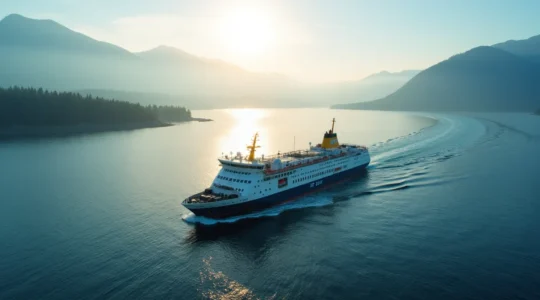
BC Ferries Long Weekends: How to Ditch the 3-Hour Waits for Good
The key to avoiding BC Ferries’ long weekend chaos isn’t luck; it’s understanding and exploiting the system’s rigid, automated rules. The 30-minute arrival cut-off is absolute; being 29 minutes early means you’ve already lost your reserved spot to the standby…
Read more
Capturing the Rockies: The 3 Best Spots for Golden Hour Photography
In summary: Success in the Rockies depends less on the “spot” and more on mastering the unique light of northern latitudes. Conveying the immense scale of the mountains requires specific framing techniques and often a telephoto lens, not just a…
Read more
Budgeting a 2-Week Family Trip to Canada: How to Save a Guaranteed $500 CAD?
Saving big on a Canadian family trip isn’t about painful sacrifices, but about understanding and exploiting the country’s unique pricing systems. Focus on avoiding Dynamic Currency Conversion (DCC) fees, which can cost you over 3% on every purchase. Book domestic…
Read more